Getting the Cleaning Schedule Right Matters More Than You Think
Communal areas are the first thing residents see when they walk through the front door. Dirty entrance halls, dusty stairwells, and grimy lift panels send a message — and it’s not a good one. For property managers across Bristol, getting the cleaning frequency right is one of those details that directly affects tenant satisfaction, retention, and the overall reputation of the building.
There’s no single answer that works for every block. A converted Victorian townhouse with six flats in Clifton has very different needs to a 40-unit modern development in Bedminster. This guide breaks down the key factors and gives you practical frequency benchmarks you can actually use.
What Affects How Often Communal Areas Need Cleaning?
Before settling on a schedule, it helps to think through the specific characteristics of your building. A few things that matter most:
- Number of units and residents — more people means more footfall, more mess, and faster build-up of dust and grime.
- Type of building — older buildings with carpeted stairwells trap more dust than modern blocks with hard flooring.
- Location — ground-floor buildings near main roads in Bristol city centre deal with more dirt being tracked in than suburban blocks.
- Resident profile — buildings with families or pets tend to see more wear on communal spaces than those occupied by professionals.
- Whether there’s a lift — lifts are high-touch, high-traffic areas that deteriorate quickly if not cleaned regularly.
Once you’ve got a clear picture of your building, you can match the cleaning schedule to what’s actually needed rather than guessing.
Recommended Cleaning Frequencies by Area
Entrance Halls and Lobbies
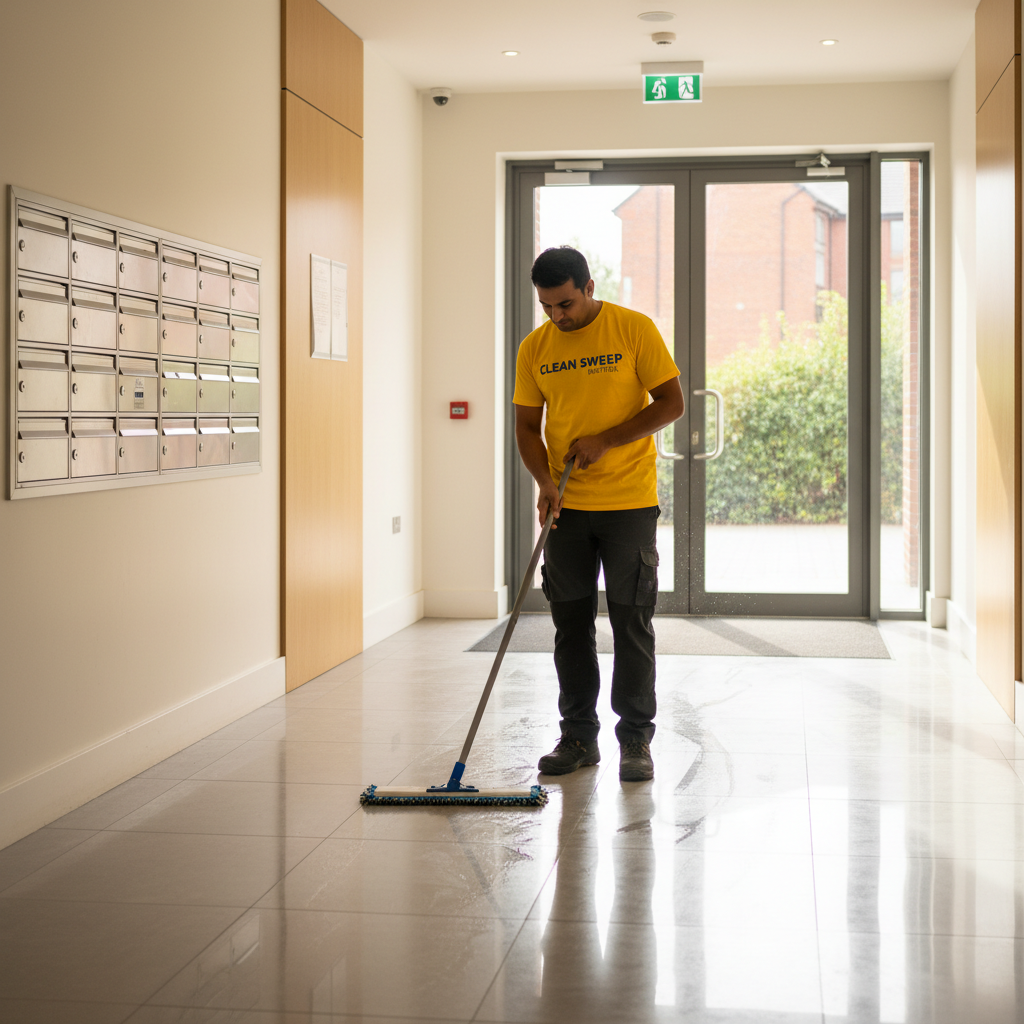
This is the most visited part of any block. Mud, leaves, post clutter, and general grime accumulate fast — especially in autumn and winter when Bristol weather does its thing. For most blocks, a minimum of twice-weekly cleaning is realistic. High-footfall buildings or those in busier parts of the city should consider daily visits.
Tasks typically include mopping hard floors, vacuuming mats, wiping down entry panels and letterboxes, and removing any litter or post that’s piled up.
Stairwells and Corridors
Stairwells are easy to neglect because residents pass through them quickly — but they accumulate dust in corners, scuff marks on walls, and fingerprints on handrails surprisingly fast. Weekly cleaning works well for smaller blocks. Larger developments or those with multiple staircases generally need two to three visits per week.
Handrails should be wiped down with a disinfectant at every visit. It’s a small step that residents notice — particularly since COVID, when hygiene standards in shared spaces became more visible.
Lifts
If your block has a lift, it needs more attention than the rest of the building. Lift interiors are enclosed, heavily touched, and often used by people carrying shopping, bikes, or pushchairs. The floor gets dirty fast, and control panels are covered in fingerprints within hours of cleaning.
Three times a week is a reasonable minimum for most Bristol blocks with lifts. For larger residential buildings, daily cleaning is worth it — it’s a small cost relative to the complaints you’ll avoid.
Bin Stores and Refuse Areas
These are often the most neglected communal spaces, and the smell and hygiene issues that build up here can cause real problems — particularly in summer. Weekly cleaning is the minimum. Fortnightly deep cleans (hosing down floors, sanitising surfaces, removing debris) help keep on top of persistent odour issues.
Bristol City Council has specific requirements around waste storage in multi-occupancy buildings, so it’s worth checking your responsibilities as a managing agent.
Car Parks and Bike Stores
These areas don’t need as much attention as internal communal spaces, but they still need to be on the schedule. Monthly sweeping and litter removal is a reasonable baseline. If the car park is enclosed or underground, you’ll want to check it more regularly for damp, oil marks, and debris.
Signs Your Current Schedule Isn’t Working
If you’re already running a cleaning contract, there are some reliable indicators that the frequency needs adjusting:
- Resident complaints about smell, mess, or hygiene in shared areas
- Visible build-up of dirt, dust, or grime between visits
- Lift floors that are consistently dirty
- Bin stores that smell between collections
- Entrance mats that are permanently saturated with mud
These aren’t just aesthetic problems. Persistent uncleanliness in communal areas is one of the main triggers for formal complaints to managing agents, and in some cases it can affect a building’s compliance with health and safety requirements.
For a deeper look at the broader implications of cleaning standards, the How Often Should Communal Areas Be Cleaned? guide covers the full picture, including legal considerations for managing agents.
The Case for a Professional Contract
Some managing agents rely on ad-hoc cleaning or ask residents to share responsibility for communal spaces. In practice, this rarely works. Standards slip, disputes arise, and the building gradually deteriorates.
A professional cleaning contract gives you consistency. You know when the building will be cleaned, what will be covered, and who’s accountable if standards aren’t met. For blocks where Clean Bees operates, clients also have access to photo-verified cleaning records via Xota — so you can see exactly what was cleaned, when, and by whom. That’s useful when you need to demonstrate compliance to a freeholder or respond to a resident complaint.
All Clean Bees staff are DBS-checked and directly employed (not subcontracted), which matters when you’re giving cleaners regular access to a residential building.
Getting the Frequency Right for Your Building
If you’re not sure where to start, a site visit is the most practical approach. A cleaning company worth their salt should be able to assess your building and recommend a schedule based on actual usage and condition — not a generic package.
Our communal area cleaning services are designed specifically for Bristol blocks and managed properties. We work with property managers across the city, from small converted houses to large purpose-built developments.
If you’d like to discuss the right cleaning frequency for your block, get in touch for a free quote — we can usually turn around a proposal within 24 hours.