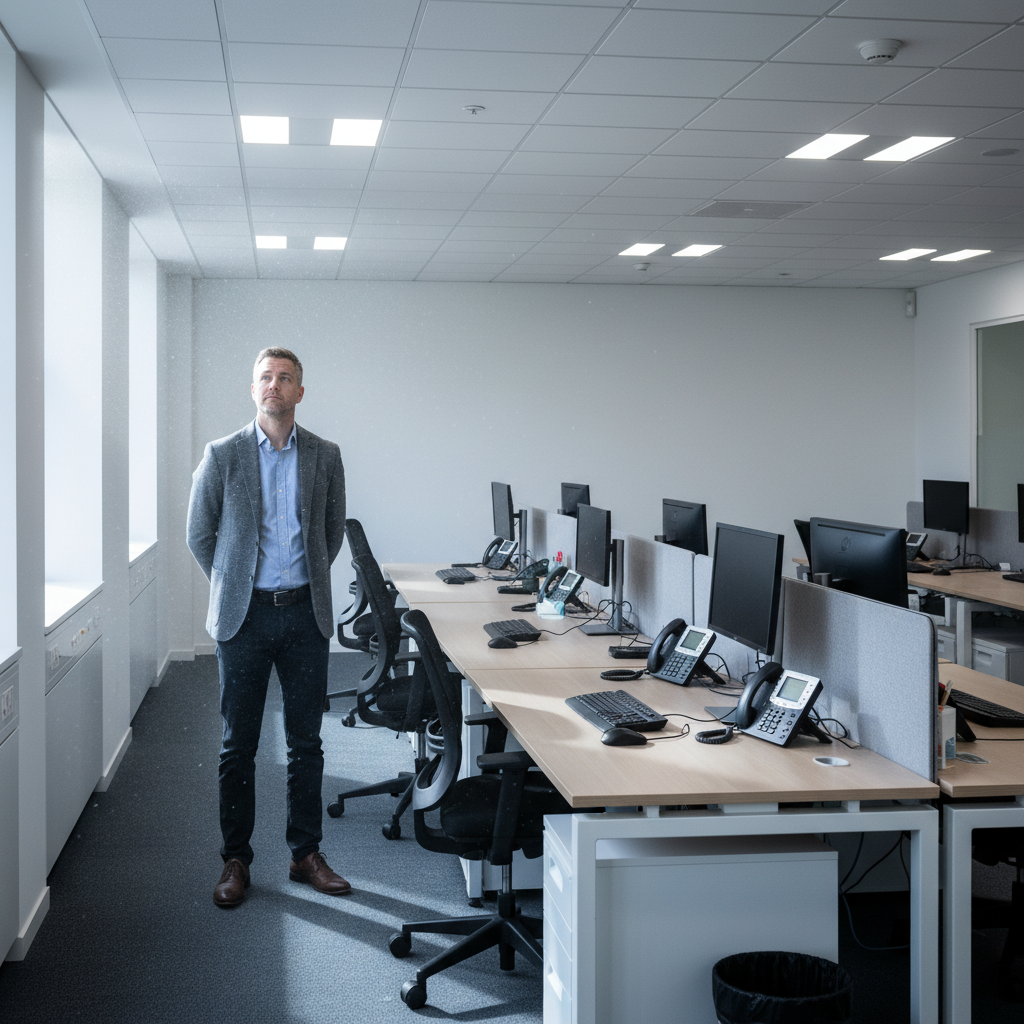
Your Office Might Be Making People Ill
Most Bristol business owners would say their office looks clean. The bins get emptied, the floors get a hoover, someone wipes down the kitchen surfaces on a Friday. Job done, right?
Not quite. There’s a difference between an office that looks clean and one that actually is. And that gap — the stuff you can’t see — is where the real office health risks live. Bacteria on desks, mould spores behind radiators, allergens in the carpet. These things don’t announce themselves, but they quietly affect the people working in your building every single day.
If you’re a facilities manager or business owner in Bristol, here’s what you should know.
The Bacteria Problem Nobody Talks About
A standard office desk harbours around 400 times more bacteria than a toilet seat. That figure gets quoted a lot, but it rarely prompts action because desks don’t feel dirty — they just look like desks.
The issue is that most office cleaning routines focus on visible mess rather than contamination. Wiping a desk with a general-purpose cloth can actually spread bacteria around if the cloth isn’t clean and the product isn’t appropriate for the surface. Shared equipment — keyboards, phones, door handles, printer buttons — gets touched dozens of times a day and often cleaned almost never.
In a busy Bristol office, this matters. Bacteria like Staphylococcus aureus and E. coli survive on hard surfaces for hours. In environments where people eat at their desks, share equipment, and skip hand washing, you’ve got a straightforward transmission route for illness. Sick days cost businesses real money, and a lot of them trace back to workplace hygiene.
A consistent office cleaning service in Bristol that specifically targets high-touch surfaces — not just visible mess — makes a measurable difference to how often your team gets ill.
Air Quality: The Invisible Issue
Poor indoor air quality is one of the most under-recognised problems in commercial buildings. Dust, pollen, pet dander brought in on clothing, mould spores, and chemical residues from cleaning products all accumulate in the air and on surfaces over time.
Carpets are particularly effective at trapping allergens. A carpet that looks fine might be holding months’ worth of dust mite waste, which is one of the most common triggers for asthma and allergic rhinitis. Regular vacuuming helps, but it needs to happen frequently and with the right equipment — a domestic vacuum used once a week won’t cut it in a busy office environment.
Mould is another one. Bristol’s climate means buildings often deal with condensation and damp, particularly in older commercial properties. Mould can grow behind furniture, under sinks, around window frames. Even low-level mould exposure aggravates respiratory conditions, and some people are far more sensitive than others. If anyone on your team regularly complains of headaches, a blocked nose, or feeling run-down at work, air quality is worth investigating.
There’s also the irony that some cleaning products make air quality worse. Harsh chemical sprays can leave residue and irritants in the air long after the cleaner has gone home. Professional commercial cleaning in Bristol should use products appropriate for the environment — effective against pathogens without creating new problems.
The Kitchen and Bathroom: High Risk, Often Under-Cleaned
Office kitchens are the number one complaint in most workplace hygiene surveys, and for good reason. A shared fridge, a communal microwave, a sink that gets used all day — these are high-contamination areas that need proper daily attention, not just a wipe when they look messy.
Food residue left on surfaces feeds bacteria rapidly. A microwave cleaned once a week might harbour days’ worth of splatter that’s become a bacterial breeding ground. Fridge handles, kettle buttons, and the bin lid are touched constantly and cleaned rarely.
Bathrooms are self-evidently a hygiene concern, but in offices they often get less attention than they deserve. Cross-contamination between bathrooms and kitchen areas happens when hand hygiene is poor — and it’s worth noting that clean, well-maintained bathroom facilities directly influence behaviour. People wash their hands more thoroughly in a clean bathroom.
What a Professional Cleaning Routine Actually Addresses
The difference between a professional commercial clean and ad hoc office tidying isn’t just thoroughness — it’s consistency and method.
A properly structured office cleaning routine targets:
- High-touch surfaces daily — door handles, light switches, keyboard trays, phone handsets, lift buttons
- Kitchen and bathroom deep cleans — going beyond surface wipes to sanitise properly
- Carpet and floor care — vacuuming with commercial-grade equipment, periodic deep extraction
- Waste management — bins emptied and relined consistently, recycling sorted correctly
- Air quality support — dusting high surfaces, cleaning air vents and radiators, avoiding chemical overload
It’s also about accountability. Clean Bees uses the Xota management platform to provide photo-verified records of every clean — so you can see exactly what was done, when, and by whom. That kind of visibility matters when you’re responsible for a building full of people.
If you’re not sure whether your current cleaning setup is actually protecting your team, our post on how clean offices boost productivity is worth a read — it covers the research on what a well-maintained workspace does for output, not just health.
Is Your Bristol Office as Clean as You Think?
The honest answer for most businesses is: probably not as clean as it should be. Not because nobody cares, but because internal cleaning arrangements tend to drift — staff change, routines get shortened, standards slip without anyone noticing until there’s a problem.
Signs your current setup might not be cutting it:
- Higher than average sick days, especially in winter
- Staff complaints about the kitchen or bathrooms
- Dust visible on shelves, monitors, or vents
- No clear cleaning schedule or accountability process
- The same person who cleans the bathroom also handles food prep areas
None of these are catastrophic on their own, but they add up. And the solution isn’t complicated — it’s a consistent, professional cleaning contract with clear scope and accountability built in.
Getting It Right for Your Bristol Business
Whether you manage a single-floor Bristol office or a multi-site commercial operation, the principles are the same: regular cleaning, properly done, by people who know what they’re doing.
Clean Bees works with Bristol businesses across a range of sectors — offices, retail, schools, healthcare facilities, communal blocks. All staff are employed directly, DBS checked, and trained to a consistent standard. No agency workers, no shortcuts.
If you’d like to talk through what a proper cleaning contract for your Bristol office would look like, get in touch for a free commercial cleaning quote. No hard sell, just a straightforward conversation about what you need.