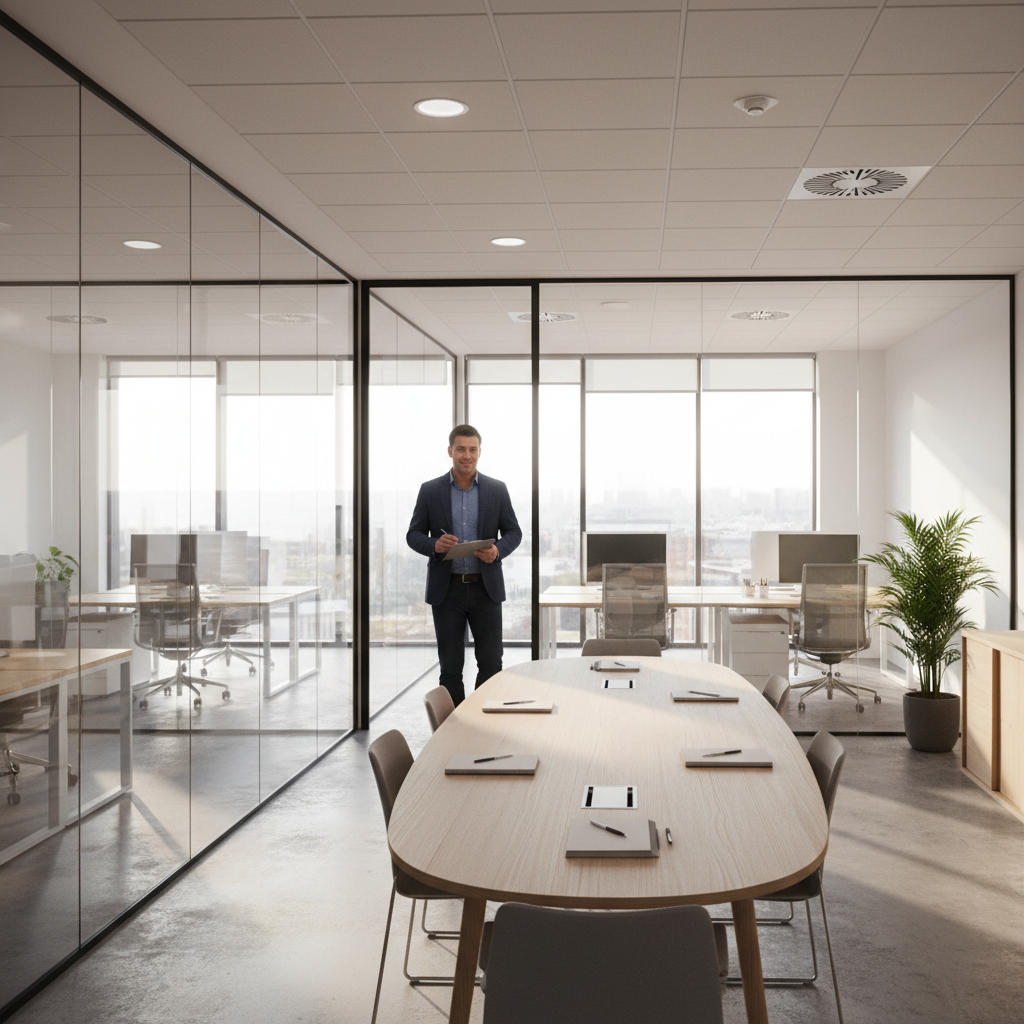
First Impressions Happen Before Anyone Speaks
Before a client shakes your hand or a new employee sits down at their desk, they’ve already formed an opinion. It happens in the reception area, the lift, the toilets. A smudged glass door, a bin that hasn’t been emptied, a coffee ring on the meeting room table — these things register instantly, even if nobody says anything out loud.
This isn’t about being precious. It’s about what a workspace communicates. A clean, well-maintained office tells people you’re organised, you care about detail, and you take your business seriously. A grubby one says the opposite, regardless of how good your product or service actually is.
Bristol businesses — whether you’re in Clifton, Temple Meads, Redcliffe or the wider city centre — are operating in a competitive environment. The quality of your office environment is part of your brand, and it’s worth treating it that way.
What Staff Are Actually Noticing
Your employees spend more time in your office than anyone else. They notice things clients might miss on a short visit — and those things affect how people feel about coming to work.
The most common complaints from office workers aren’t about grand failures. They’re about recurring small ones:
- Toilets that smell despite being cleaned daily
- Shared kitchen surfaces that feel sticky or are visibly grimy
- Desks and screens that gather dust week after week
- Floors that are vacuumed but never properly spot-cleaned
- Bins that overflow by Thursday even though the clean is on a Monday
When staff raise these issues, it’s usually a sign that cleaning frequency or scope isn’t matching the actual use of the space. A five-day office cleaned three times a week will always fall short. So will a comprehensive daily clean that skips certain areas because they’re assumed to be low-traffic.
Getting this right matters for retention too. People leave jobs for lots of reasons, but a workplace that feels uncared for chips away at morale in ways that are hard to quantify until someone hands in their notice.
What Clients Are Judging You On
When a client or prospect visits your office, their assessment of your business starts the moment they walk through the door. Most won’t mention cleanliness even if it bothers them — they’ll just form a quieter opinion about how professional you are.
The areas that get noticed most are:
- Reception and entrance areas — these set the tone for the whole visit
- Meeting rooms — marks on walls, stained chairs, cluttered whiteboards and dusty blinds all register
- Toilets — a client using your facilities will judge you on what they find
- Windows and glass partitions — smears and fingerprints are surprisingly visible in natural light
- General odour — a clean office should smell neutral, not like cleaning products or stale food
The bar isn’t impossibly high. Clients aren’t expecting a five-star hotel. But they are comparing your space, consciously or not, to other offices they visit. If yours falls noticeably below that baseline, it creates doubt.
What Good Office Cleaning Standards Actually Look Like
There’s a gap between cleaning happening and cleaning working. Understanding that gap is where most facilities managers find value.
Good commercial cleaning standards cover more than the obvious daily tasks. They include a schedule that reflects how the space is actually used — not just a generic checklist applied uniformly across every room.
For a Bristol office, that typically means:
- Daily tasks: vacuuming, mopping hard floors, emptying bins, wiping kitchen surfaces, cleaning toilets and restocking consumables
- Weekly tasks: wiping down desks and screens, cleaning glass partitions and mirrors, descaling kitchen equipment, spot-cleaning upholstery
- Monthly tasks: deep cleaning behind appliances, sanitising carpets in high-traffic areas, cleaning light fittings and vents
The specifics depend on your office size, staff headcount and how clients use the space. A ten-person studio has different needs to a 200-desk call centre. But the principle is the same: cleaning should be proportionate to use, not just presence.
The Role of Verification and Accountability
One thing that’s changed in commercial cleaning over the last few years is the expectation around evidence. It’s no longer enough to assume the clean happened because the cleaners were scheduled. Facilities managers and business owners increasingly want to know what was done, when, and to what standard.
At Clean Bees, we use Xota — a photo-verified cleaning management system that logs each clean with timestamped photos. That means if something wasn’t done, there’s a record of it. And if it was done well, you can see that too. It removes the guesswork from a part of facilities management that’s traditionally been taken on trust.
That level of accountability also makes it easier to have conversations when standards slip. Rather than a vague sense that something isn’t right, you have specific, documented evidence to work from.
When It’s Time to Reassess Your Current Cleaning Arrangements
If your staff are routinely flagging cleaning issues, or if you’ve noticed that client-facing areas aren’t consistently up to standard, those are signals worth taking seriously.
Sometimes the issue is frequency — the schedule simply needs adjusting. Sometimes it’s scope — certain areas or tasks have been overlooked. And sometimes it’s a sign that the current provider isn’t delivering what was agreed.
Our office cleaning services in Bristol are designed around how your business actually operates. We use employed, DBS-checked staff — not agency workers — which means consistency matters to us in a practical sense. The same people, reliably, doing the same job to the same standard.
If you’re not confident that your current arrangements are meeting the standard your staff and clients expect, it’s worth having a conversation. We offer free site assessments and can usually give a clear picture of what a proper clean should look like for your specific space.
Raising the Bar Is Simpler Than You Think
Most Bristol businesses aren’t far off where they need to be. The gap between acceptable and genuinely impressive is often just a matter of consistency — showing up to the same standard every time, without the occasional dip that erodes confidence.
That consistency is harder to achieve than it sounds, which is why many businesses end up with a cleaning provider who’s fine most of the time but frustrating the rest. Fine most of the time isn’t what your clients are judging you on. They’re judging you on the day they visited when the meeting room wasn’t ready.
If you’d like to talk through what better cleaning standards could look like for your Bristol office, get in touch for a free commercial cleaning quote. No pressure, no jargon — just a straightforward conversation about what you need.