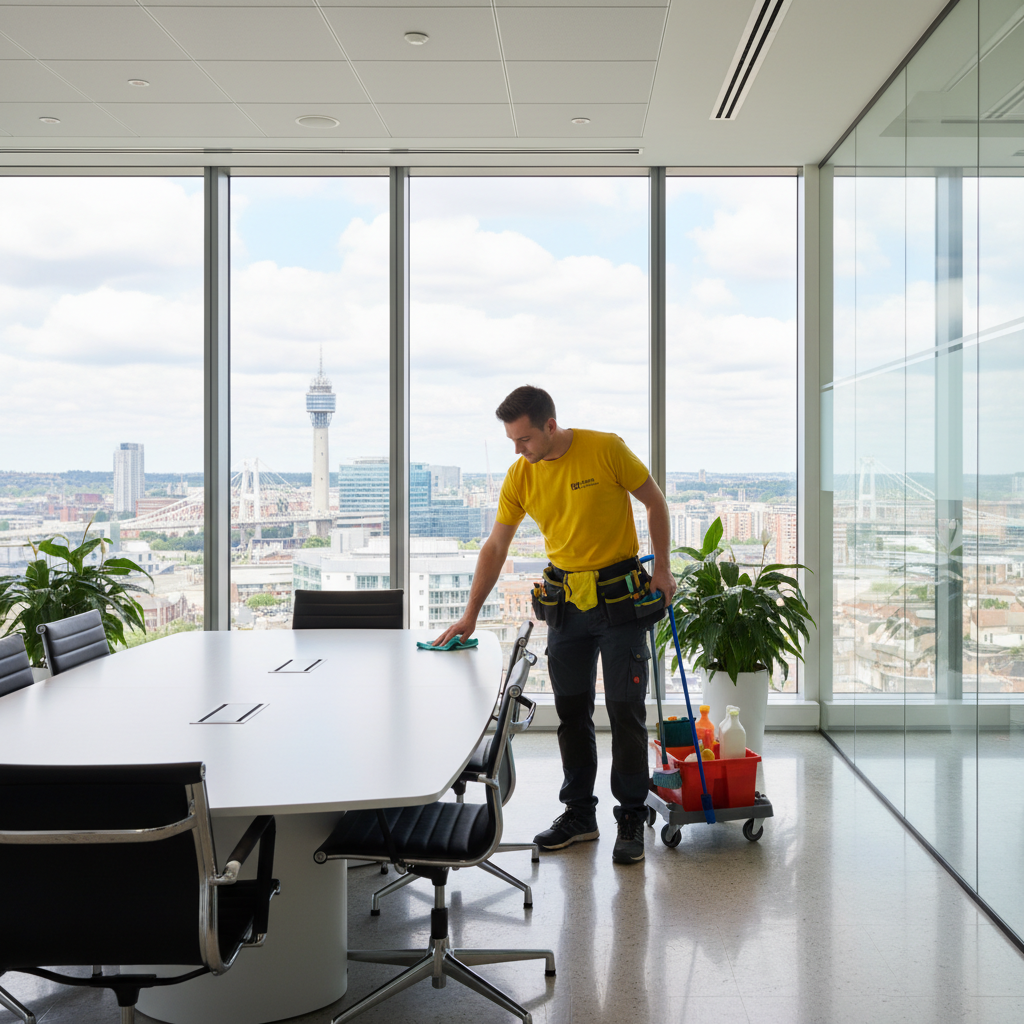
Your Legal Duties Don’t Stop at the Office Door
If you run a business in Bristol — whether it’s an office block in Clifton, a school in Bedminster, or a retail unit in Cabot Circus — you have legal health and safety obligations that extend well beyond keeping the fire exits clear. Cleanliness is part of that picture, and it’s more regulated than most employers realise.
The Health and Safety at Work Act 1974 sets the foundation. Under it, employers must provide a safe working environment, and that includes sanitary conditions. The Workplace (Health, Safety and Welfare) Regulations 1992 go further, specifically requiring that workplaces are kept clean, that surfaces are maintained so they can be properly cleaned, and that waste doesn’t accumulate. These aren’t guidelines — they’re legal requirements.
So where does that leave facilities managers and business owners when it comes to day-to-day cleaning? Let’s break it down.
What the Law Actually Requires
The 1992 Workplace Regulations are pretty direct. Regulation 9 states that every workplace and its contents — walls, floors, ceilings, furniture, equipment — must be kept sufficiently clean. Regulation 20 covers sanitary conveniences: they need to be clean and properly maintained. Regulation 22 requires adequate facilities for washing, again kept clean and in good working order.
The Health and Safety Executive (HSE) also expects employers to manage risks from biological hazards. In a commercial setting, that can mean anything from poorly maintained washrooms spreading bacteria to contaminated surfaces in food prep areas.
What this means practically: having someone give the kitchen a wipe-down once a week probably isn’t going to cut it. The standard you’re held to scales with your sector, how many people use the space, and what kind of work happens there.
Employer Cleaning Obligations by Sector
Employer cleaning obligations vary quite a bit depending on your industry. A professional services firm with 15 staff has different requirements to a primary school or a gym.
Offices
Office environments need regular cleaning of communal areas, kitchens, and toilets. Desks and shared equipment are often overlooked but matter for hygiene compliance, particularly post-pandemic. The HSE doesn’t specify cleaning frequency for offices, but the standard of cleanliness has to be maintained — meaning if something is visibly dirty or poses a risk, you have a duty to address it promptly.
Schools and Educational Settings
Schools are held to a higher standard because of the volume of people passing through, the age of occupants, and the types of surfaces in contact — floors, desks, door handles, toilet facilities. Ofsted doesn’t directly inspect cleaning, but local authority environmental health officers can and do. Schools need documented cleaning schedules and evidence that those schedules are followed.
Retail and Commercial Spaces
Retail environments have the added complexity of public access. High foot traffic means faster accumulation of dirt and contamination. Spills need to be dealt with immediately — not just for hygiene but for accident prevention under the same health and safety legislation. If a customer slips because a floor wasn’t cleaned properly, that’s a liability issue as much as a hygiene one.
Block and Communal Areas
Communal areas in managed residential and commercial blocks sit in an interesting legal space. The responsibility typically falls to the managing agent or landlord. Stairwells, lifts, entrance lobbies, and bin stores all need to meet basic cleanliness standards — and where service charges are collected, leaseholders increasingly expect evidence that those standards are being met.
What Counts as Evidence?
If the HSE, a local authority inspector, or an insurer ever asks you to demonstrate that you’re meeting your cleaning obligations, documentation matters. That means:
- A written cleaning schedule specifying what gets cleaned and how often
- Sign-off sheets or digital records showing the work was completed
- Records of any complaints or incidents and how they were addressed
- Details of the cleaning provider used, including their training and methods
This is one area where working with a professional commercial cleaning company makes a real difference. A reputable provider will give you documentation as standard — not as an afterthought. For a deeper look at the standards you should be working to, the The Complete Guide to Commercial Cleaning Standards in Bristol covers this in detail.
Where DIY Cleaning Falls Short
A lot of smaller businesses in Bristol rely on staff members to handle cleaning duties. This is fine for day-to-day tidying, but it creates problems when it comes to compliance. Staff who clean aren’t trained in COSHH regulations (the Control of Substances Hazardous to Health), may not use the right products for the surfaces or risks involved, and don’t produce the kind of documentation an inspector would want to see.
There’s also the liability question. If an employee injures themselves or becomes ill due to inadequate cleaning standards, and it emerges that cleaning was done informally without proper oversight, you’re exposed.
Professional cleaners are trained, insured, and familiar with the regulatory requirements for different types of commercial premises. That matters when you’re trying to demonstrate compliance.
The Role of Commercial Cleaning in Risk Management
Beyond legal compliance, there’s a practical risk management angle that’s easy to underestimate. Poorly maintained workplaces lead to slips, trips, and falls — still one of the most common workplace injuries in the UK. Regular professional cleaning reduces those risks.
Hygiene failures in food preparation areas, medical environments, or childcare settings can have serious consequences. The cost of an outbreak of illness, a regulatory fine, or a compensation claim is significant compared to the cost of a proper cleaning contract.
Clean Bees works with businesses across Bristol — offices, schools, retail units, and communal blocks — providing commercial cleaning services that are designed around the specific needs and compliance requirements of each sector. All staff are employed and DBS-checked, and cleaning is documented and photo-verified through the Xota platform, giving you a clear audit trail.
Practical Steps for Bristol Employers
If you’re not sure whether your current cleaning arrangements are up to scratch, here’s a useful starting point:
- Review the Workplace Regulations — specifically Regulations 9, 20, and 22. If you can’t confidently say your premises meet each one, you have gaps to address.
- Check your documentation — Do you have a cleaning schedule? Are there records of it being followed? If not, that’s a risk.
- Assess your sector-specific obligations — A school has different requirements to an office. Make sure you understand what applies to you.
- Consider whether your current provider (or arrangement) is fit for purpose — Not just in terms of cleanliness, but in terms of what they can actually evidence.
Getting this right isn’t complicated, but it does require taking it seriously. Most employers who get caught out aren’t cutting corners intentionally — they just haven’t thought through what the regulations actually demand.
If you want to talk through your cleaning requirements and what proper compliance looks like for your business, get in touch with Clean Bees for a free commercial cleaning quote. We work with businesses across Bristol and can help you put the right setup in place.