
Not All Clean Is the Same
Most business owners have had the same experience at some point. You walk into the office on a Monday morning, it looks fine on the surface, but something feels off. The bins were emptied, the floor was hoovered — but the keyboard trays are still grimy, the communal kitchen smells faintly of last Friday’s lunch, and the glass on the front door has smudges at exactly the wrong height.
That’s the difference between a space that’s been tidied and one that’s been properly cleaned. And for businesses in Bristol, that difference matters more than most people realise.
What Professional Cleaning Actually Involves
When people think about commercial cleaning, they often picture someone with a mop. The reality is quite different.
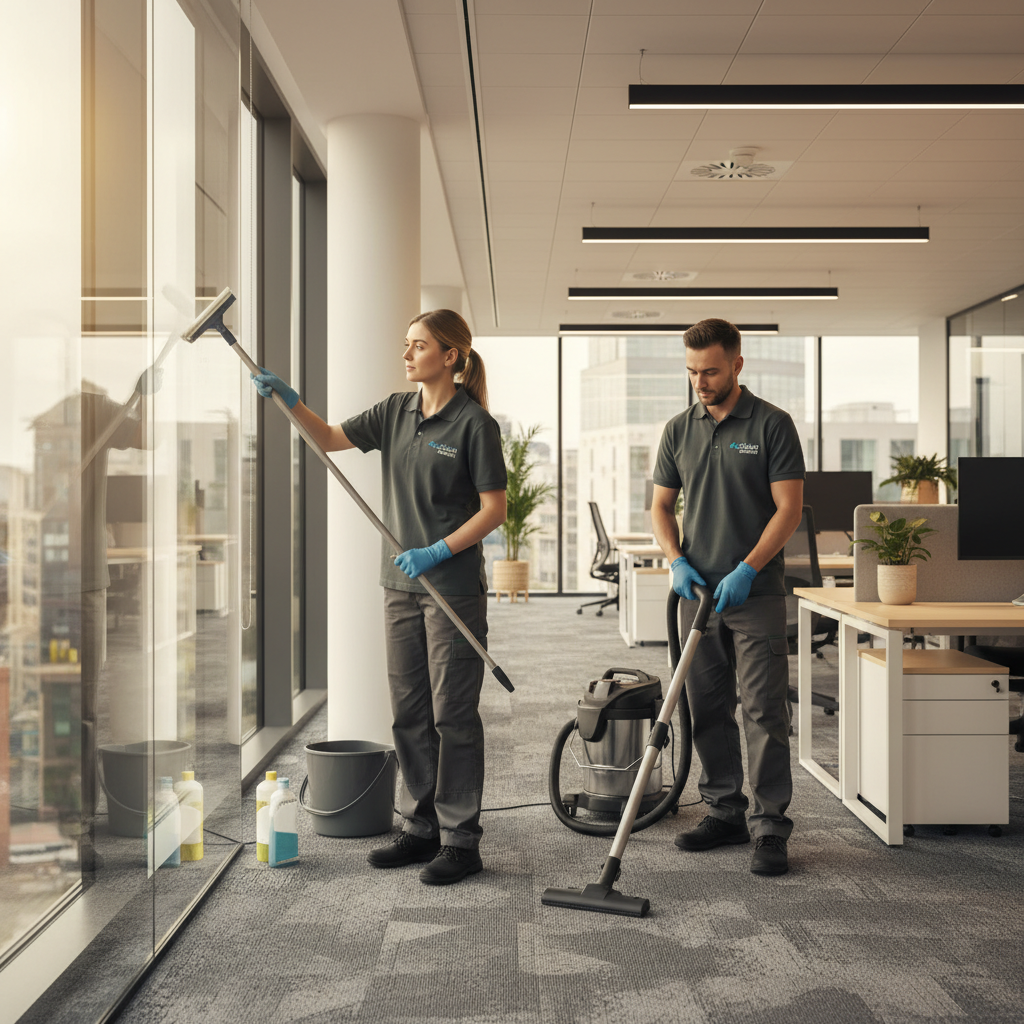
A professional cleaning service covers a structured scope of work — specific tasks, specific frequencies, and accountability for whether those tasks were done. It’s not reactive. It’s planned. The cleaning that happens in a dental practice is completely different from what’s needed in a warehouse or a primary school, and a decent cleaning company treats those jobs accordingly.
Commercial cleaning services in Bristol typically cover everything from daily office maintenance to deep cleaning cycles, sanitisation of high-touch surfaces, waste management, and sometimes specialist work like carpet cleaning or window cleaning — depending on your building and your industry.
The key word is system. Professional cleaners work from a defined checklist and schedule, not intuition.
Training and Products That Actually Work
One thing that genuinely separates professional cleaning from DIY or informal arrangements is the combination of training and products used.
Commercial-grade cleaning products are formulated differently. A disinfectant you buy at a supermarket might kill some bacteria on a surface after two minutes of contact time. A professional-grade equivalent might have a 30-second kill time and a broader spectrum of effectiveness — which matters a lot in environments like healthcare settings, gyms, or anywhere food is handled.
Training matters too. Knowing how to clean properly — the correct dilution ratios, the right technique for different surface types, how to avoid cross-contamination between areas — takes time to learn and even more time to do consistently. A trained cleaner knows not to use the same cloth from the toilet area in the kitchen. That might sound obvious, but without proper systems and colour-coded equipment, these things genuinely get missed.
Consistency Is the Part Most People Underestimate
Here’s something worth thinking about. A one-off deep clean is satisfying, but it’s what happens every week — or every day — that determines the actual condition of your workspace over time.
Professional cleaning services run on schedules. A good commercial cleaning schedule for your office will break tasks into daily, weekly, and monthly rotations. Daily tasks keep visible areas presentable. Weekly tasks catch the things that accumulate slowly. Monthly deep cleans address the stuff that doesn’t show up until it becomes a problem — like the buildup behind radiators, the grout in bathroom tiles, or the air vents that nobody ever looks at.
Without that structure, cleaning becomes reactive. Something gets noticed, someone complains, it gets sorted. Then it builds up again. That cycle is genuinely more expensive in the long run, both in terms of time and the cost of fixing problems that could have been prevented.
The Accountability Factor
This is where professional services genuinely earn their keep. When you hire a commercial cleaning company, you’re not just paying for labour — you’re paying for accountability.
Good cleaning companies provide evidence of what was done. At Clean Bees, that’s handled through Xota, a proprietary platform that gives clients photo evidence, timestamps, and access to a client portal where you can see exactly what was cleaned and when. If something wasn’t done, it’s visible. If something was done but missed, it can be flagged and fixed quickly.
That level of transparency is genuinely hard to replicate with internal arrangements or informal cleaning agreements. With a formal contract, you also have a clear escalation path if standards slip — and reputable companies take that seriously because their reputation depends on it.
When It Makes Business Sense
Not every business needs a full commercial cleaning contract from day one. But there are some clear signals that it’s time to move to a professional arrangement.
If your building has more than a handful of staff, if you receive clients or visitors regularly, if you operate in a regulated industry, or if you’ve had complaints about cleanliness — those are all good indicators that ad hoc arrangements aren’t cutting it.
The economics are often more straightforward than people expect. When you factor in the time staff spend cleaning (or avoiding cleaning), the cost of products bought piecemeal, and the risk of compliance issues in regulated sectors, a professional contract frequently works out cheaper than the status quo. It also takes the whole issue off your plate, which has real value.
What to Look for in a Provider
There’s a meaningful difference between cleaning companies, even among those that look similar on paper. Here’s what to pay attention to:
- Sector experience — A company that cleans offices, schools, and healthcare environments understands that different environments need different approaches. Ask for relevant references.
- Insurance and compliance — Public liability insurance and employer’s liability are non-negotiable. Check they’re current.
- Staff vetting — DBS checks matter, especially if your premises have sensitive areas or the cleaning happens outside staffed hours.
- Communication — Can you reach them easily if something needs to be raised? Is there a named contact? That sounds basic but it genuinely varies.
- Reporting — Do they provide any evidence of work completed? Platforms like Xota make this straightforward, but at minimum there should be a way to verify that the job was done.
Ready to See the Difference?
If you’re running a business in Bristol and you’re not entirely happy with the current cleaning arrangements — or you want to understand what a proper commercial cleaning contract looks like — it’s worth having a conversation.
Clean Bees works with businesses across Bristol in offices, schools, retail environments, healthcare settings, and more. We’re happy to do a site visit, talk through what you actually need, and give you a straight answer on whether we’re the right fit.
Get a commercial cleaning quote and find out what professional cleaning actually looks like for your business.