
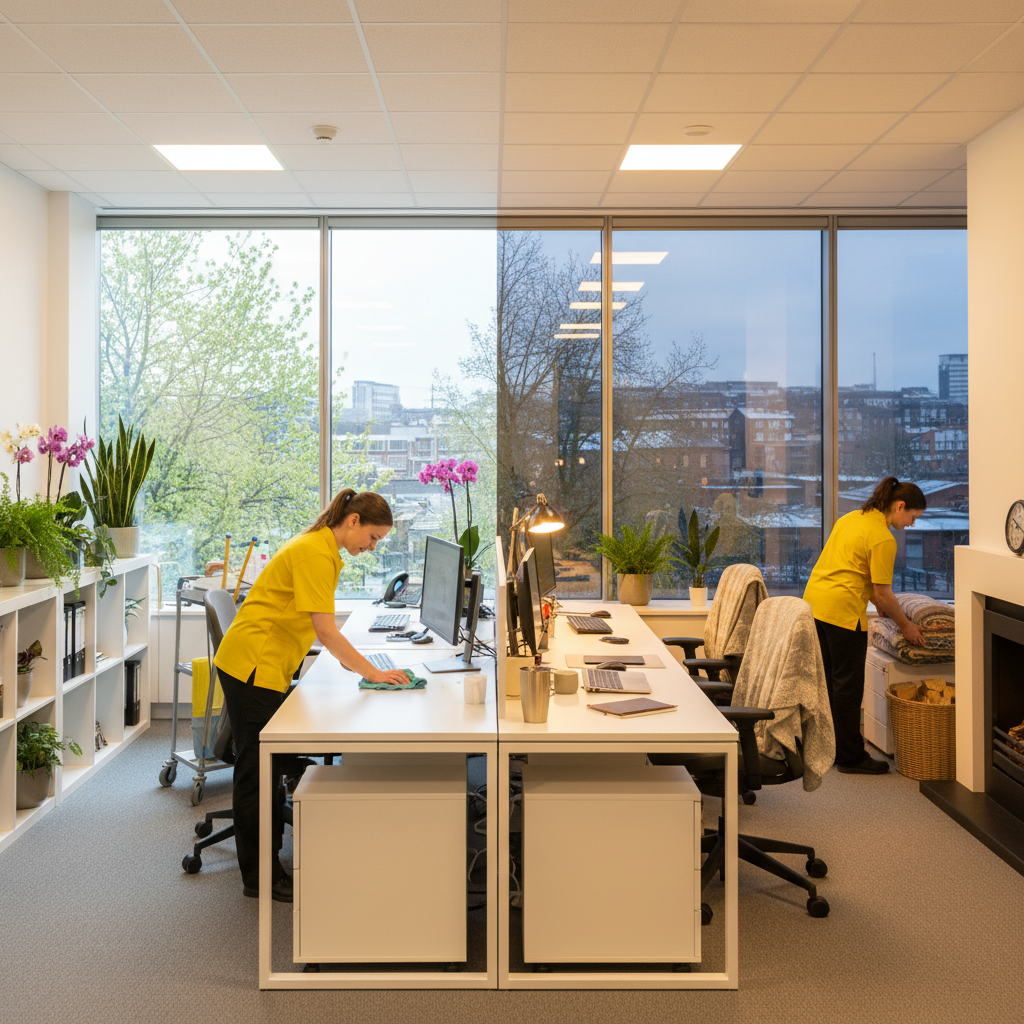
Why Seasonal Office Cleaning Actually Matters
Most offices have a regular cleaning routine — bins emptied, floors vacuumed, surfaces wiped down. But a standard daily or weekly clean isn’t designed to catch everything. Seasonal shifts bring different problems: mud and wet boots in winter, pollen and open windows in spring, heating systems kicking in or switching off. If your cleaning schedule doesn’t account for these changes, things start to slip.
For facilities managers and business owners in Bristol, getting ahead of the seasons makes a real difference — both to how the office looks and how it functions. Here’s how to approach it properly.
Spring Office Cleaning: What to Focus On
Spring is the obvious time for a deep clean. The office has been sealed up through the colder months, the heating has been running constantly, and dust has settled into places nobody’s thought about since last year. A proper spring office clean goes well beyond the usual routine.
Ventilation and Air Quality
After months of windows staying shut, air quality inside offices tends to drop. Dust accumulates in vents and air conditioning units. When you switch from heating to cooling or open windows again, all of that gets circulated through the workspace. Clean or replace filters in HVAC units before spring sets in properly. Wipe down vent covers and grilles — these are easy to overlook but make a visible difference.
Windows and Natural Light
Bristol’s winters aren’t gentle. By March or April, office windows are typically carrying months of grime, rain residue, and general urban dirt. Clean windows make an office feel dramatically different. More natural light improves the working environment too, which is worth caring about if you’re trying to retain staff or impress clients walking through the door.
Deep Cleaning High-Touch Surfaces
A spring office clean is the right time to go beyond standard surface wiping. That means keyboards, monitors, phone handsets, light switches, door handles, and communal equipment like printers and kitchen appliances. These surfaces accumulate bacteria over time and regular cleaning schedules often miss them. If you’re working with a commercial cleaning provider, make sure these are explicitly included rather than assumed.
Decluttering and Storage Areas
Spring is when storage rooms, filing areas, and forgotten corners tend to get attention. Facilities managers often use this as an opportunity to audit what’s actually being stored — old equipment, outdated paperwork, supplies that were ordered and never used. Getting rid of clutter before a deep clean makes the clean itself more effective and keeps spaces from becoming fire or trip hazards.
Carpets and Upholstery
Winter takes a toll on office carpets. Wet shoes, salt brought in from gritted pavements, and general footfall leave carpets looking dull and harbouring dirt that regular vacuuming doesn’t fully remove. A professional carpet clean in spring sets the floor up well for the rest of the year. The same applies to fabric seating in meeting rooms and reception areas.
If you want to build this kind of seasonal thinking into your ongoing cleaning routine, it helps to have a structured plan. This guide to creating a commercial cleaning schedule for your office covers how to layer daily, weekly, and periodic tasks so nothing gets missed.
Winter Office Cleaning: Different Problems, Same Principle
Winter cleaning gets less attention than the spring version, but it shouldn’t. Preparing your workspace before the colder months arrive is far more effective than trying to deal with problems after they’ve set in.
Entrance Areas and Floor Protection
Winter in Bristol means rain, mud, and the occasional frost. Entrance halls take a hammering from November through February. Heavy-duty entrance matting captures the worst of it, but it needs cleaning itself — a sodden, dirty mat does nothing useful. Hard floors in entrance areas need more frequent mopping during winter months to prevent slip hazards and protect the floor surface.
Heating Systems and Radiators
Before the heating goes on properly, it’s worth getting behind radiators and around heating units. Dust builds up there over summer and burns off when the heat comes on — which is both a fire risk and a source of that unpleasant smell you sometimes get in October when the boiler fires up for the first time. Not glamorous, but worth doing.
Kitchen and Welfare Facilities
People spend more time indoors in winter. That means more use of kitchens, more frequent hot drinks, and generally more footfall in communal areas. A winter prep clean should include a thorough clean of kitchen appliances, cupboards, and welfare facilities — and your cleaning schedule should increase frequency in these areas during the colder months.
Sanitisation and Illness Prevention
Cold and flu season is real, and it has a measurable impact on workplace productivity. Regular sanitisation of high-touch surfaces — door handles, lift buttons, shared equipment — becomes more important from October onwards. If you haven’t already, this is the time to make sure hand sanitiser stations are topped up and in the right places.
Working With Your Cleaning Provider Seasonally
If you have a commercial cleaning contract in place, seasonal cleaning shouldn’t be something you have to sort out separately. A good provider will adjust their service to reflect seasonal demands — increasing frequency in entrance areas in winter, scheduling a deeper clean at the start of spring, and flagging anything that needs attention.
That said, it’s worth having an explicit conversation about it. Many facilities managers assume their cleaning contractor will adapt automatically, but unless it’s built into the contract or discussed directly, it may not happen. Ask your provider what their seasonal cleaning provision looks like and whether it’s included in your current agreement.
Clean Bees works with businesses across Bristol on commercial cleaning contracts that account for exactly this kind of thing. Our team manages offices, schools, retail spaces, communal blocks, and more — and we adjust our approach based on what each site actually needs at different times of year.
If you’d like to talk through what a seasonal cleaning plan might look like for your premises, get in touch via our commercial enquiry form and we’ll put something together for you.
A Quick Seasonal Checklist
To summarise, here’s what to focus on at each transition:
Spring:
- HVAC filters and ventilation
- Window cleaning
- Deep clean of high-touch surfaces
- Carpet and upholstery clean
- Declutter storage areas
Winter prep (autumn):
- Entrance matting review and clean
- Radiators and heating units
- Kitchen and welfare facility deep clean
- Increase sanitisation frequency
- Floor protection in high-footfall areas
If you want a provider that handles professional office cleaning in Bristol with this level of detail built in, Clean Bees is worth a conversation.