
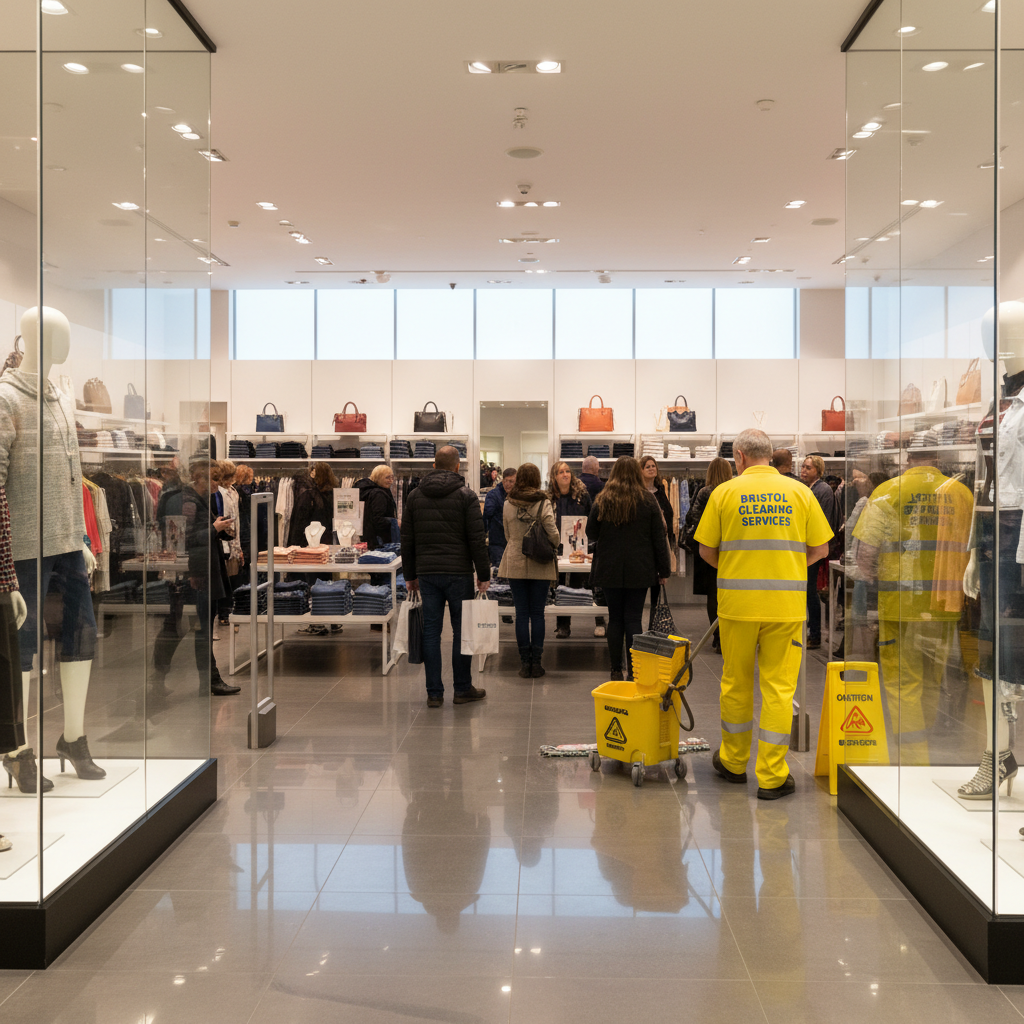
When Footfall Goes Up, Cleaning Standards Can’t Go Down
Saturday afternoons in Cabot Circus. The weeks running up to Christmas. Bank holiday weekends. These are the moments Bristol retailers wait for all year — and they’re also the moments when your store is most likely to look like a disaster zone by 3pm.
High footfall brings muddy floors, overflowing bins, fingerprint-covered glass, and fitting rooms that look like a jumble sale. The challenge isn’t just keeping up. It’s having a system in place so that busy periods don’t undo your cleaning standards entirely.
Here’s what actually works.
Start With a Cleaning Rota That Reflects Reality
Most retail cleaning problems during busy periods come down to one thing: the rota was built for a quiet Tuesday, not a packed Saturday.
Your cleaning schedule needs to reflect your actual trading patterns. If you know Saturday is three times busier than Wednesday, your cleaning tasks and the frequency of those tasks should reflect that difference. Check-in times for toilets, floor mopping intervals, and till area wipe-downs all need to be more frequent when foot traffic is high.
If you’re managing multiple tasks across staff members, it helps to have this written down clearly. We’ve put together a guide on creating the perfect commercial cleaning schedule that walks through how to structure this properly — worth a look if your current rota feels a bit ad hoc.
Divide Your Store Into Zones
Trying to clean an entire shop floor at once during trading hours is impractical and disruptive. Zone-based cleaning is a much smarter approach.
Split the store into manageable sections — entrance area, shop floor, fitting rooms, stock room, tills, and customer toilets if you have them. Assign responsibility for each zone and set a realistic interval for checks. During a busy period, high-traffic zones like entrances and tills might need attention every 30-45 minutes. Lower-traffic areas can be checked less often.
This approach means nothing gets completely neglected, and your team isn’t running around trying to respond to every mess reactively.
The Entrance Matters More Than You Think
Bristol weather doesn’t do anyone any favours. Rain, mud, and wet pavements mean your entrance takes a battering from October through to April, and even in summer it’s not exactly pristine.
Your entrance floor is the first thing customers see and one of the fastest areas to deteriorate during busy periods. A good quality entrance matting system catches a significant amount of dirt before it travels further into the store. But matting alone isn’t enough — those mats need to be checked regularly and replaced or cleaned when they’re saturated.
Keep a mop and bucket accessible for quick response during trading hours. Wet floor signage should always be within reach. Slippery entrances are a liability issue as much as a presentation one.
Fitting Rooms Need a Dedicated Process
Fitting rooms are the most overlooked part of retail cleaning, and during busy periods they become chaotic fast. Clothes on the floor, hangers everywhere, security tags left behind — it adds up quickly.
Assign someone specifically to fitting room management during peak hours. Their job isn’t just to tidy clothes back onto rails. It’s to wipe down mirrors and door handles, check for any damage or mess, and make sure the space feels clean for the next customer.
A quick clean between customer uses during busy periods isn’t always possible — but a dedicated check every 20-30 minutes during peak trading is realistic and makes a noticeable difference.
Toilets Are Non-Negotiable
If your store has customer-facing toilets, they need more attention during busy periods than almost anywhere else. A toilet check every 30 minutes is a reasonable baseline during high footfall trading. Every hour is the absolute minimum.
Stock up before a busy period — paper towels, soap, and bin liners. Running out mid-Saturday isn’t acceptable and it reflects badly on the whole store. Keep a simple checklist on the back of the door so staff can log each check.
Post-Close Deep Clean: Making It Count
However well you manage cleaning during the day, a thorough post-close clean is still essential. During busy periods, this matters even more.
Focus on the areas that took the most punishment — floors, fitting rooms, till areas, and customer toilets. Don’t cut corners because the team is tired. The store needs to be ready for tomorrow’s trade, and a poor post-close clean compounds over consecutive busy days.
If your in-house team is stretched, this is often where outsourcing part of the cleaning makes the most sense. A professional retail cleaning contractor handles the heavy work after hours so your staff aren’t burning out trying to manage everything.
When In-House Cleaning Isn’t Enough
There’s a point for most retailers where in-house cleaning stops being cost-effective. Managing rota complexity, buying and maintaining equipment, dealing with staff absence — it adds up. A dedicated retail cleaning service in Bristol takes that off your plate entirely.
Professional retail cleaners work around your trading hours, understand the specific demands of shop environments, and bring their own equipment and materials. For multi-site retailers, a contract cleaning arrangement also means consistency across all locations — the same standard everywhere, every day.
Build Cleaning Into Your Busy Period Planning
The retailers who handle busy periods best aren’t the ones who react fastest when things get messy. They’re the ones who planned for it.
Before your next peak trading period, review your cleaning rota, check your stock of supplies, brief your team on zone responsibilities, and decide whether your current setup is actually going to cope. If the answer is no, sort it out before the rush — not during it.
If you’d like to talk through what a professional retail cleaning contract could look like for your Bristol store, get in touch with us here. We work with retailers across Bristol and can put together a cleaning plan that fits around your trading hours and budget.