
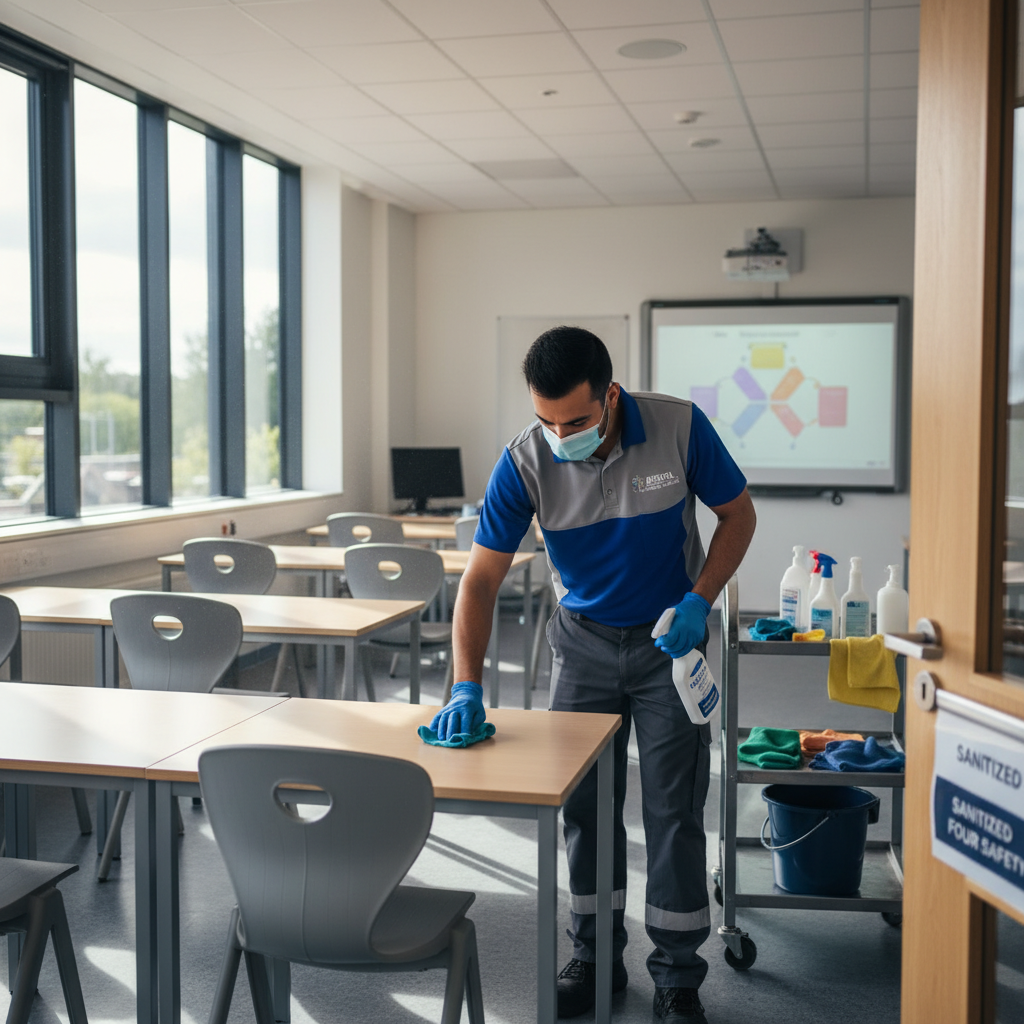
Why School Cleaning Is a Different Beast Entirely
Running a clean school isn’t the same as cleaning an office. You’re dealing with hundreds of children moving through the same corridors, touching the same door handles, sharing the same toilets — and doing all of this across a full school day that leaves very little window for cleaning staff to work undisturbed.
For school administrators and facilities managers in Bristol, maintaining a genuinely safe school environment isn’t just about appearances. It’s about infection control, compliance, and the basic duty of care owed to students and staff alike. Get it wrong and the consequences are real: illness outbreaks, complaints from parents, regulatory scrutiny, and in worst cases, school closures.
So what does effective school cleaning in Bristol actually look like in practice?
The Unique Cleaning Demands of Educational Facilities
Schools accumulate bacteria and viruses at a rate that most commercial buildings don’t come close to. Children aren’t particularly careful about hygiene — that’s not a criticism, it’s just biology and behaviour. Surfaces in classrooms, canteens, and shared changing areas are touched repeatedly by many different hands throughout the day.
High-touch points are the biggest concern. Think light switches, door handles, shared equipment like keyboards and tablets, gym equipment, and toilet flush handles. These need attention far more frequently than once-a-day cleaning schedules typically allow.
Then there are the spaces that require specialist attention:
- Science labs — chemical residues and biological waste need careful handling
- Kitchens and canteens — food hygiene regulations apply here, not just general cleaning standards
- Sports halls and changing rooms — sweat, moisture, and high footfall create ideal conditions for mould and bacteria
- Early years classrooms — younger children put things in their mouths, so surface cleaning products need to be appropriate and residue-free
A cleaning company that treats all commercial spaces the same way will struggle with these demands. Specialist school cleaning services in Bristol are built around these specific challenges rather than adapted from a generic commercial template.
What a Safe School Cleaning Schedule Actually Looks Like
Most Bristol schools rely on a combination of daytime and out-of-hours cleaning. Here’s how that tends to break down:
Before School Starts
Early morning cleans focus on getting the building ready for the day. Toilets are sanitised, entrance areas are mopped and tidied, and any areas cleaned the evening before are checked and touched up if needed. This sets the baseline for the day ahead.
During School Hours
This is where many schools have gaps. Toilet checks and refills, spot-cleaning spillages, and keeping communal areas presentable through the day require either in-house caretaking staff or a cleaning contractor who provides daytime cover. Schools that skip this step often find that toilet areas in particular deteriorate badly by mid-afternoon.
After School
The main deep clean happens once students have left. Classrooms are vacuumed or mopped, bins are emptied, desks and surfaces are wiped, and high-touch points are disinfected. This is the most time-intensive part of any school cleaning schedule and needs to be done thoroughly every day — not just on Fridays.
Infection Control During and After Illness Outbreaks
The COVID-19 pandemic changed how everyone thinks about school hygiene, and for good reason. Protecting students and staff during illness outbreaks isn’t a luxury — it’s an essential baseline for modern school operations.
This means:
- Using hospital-grade disinfectants on high-touch surfaces when there’s an active outbreak
- Following Public Health England guidelines for norovirus, flu, and respiratory illness protocols
- Training cleaning staff to recognise and respond to biohazard situations
- Having rapid-response cleaning available for classrooms that have been isolated
Generic commercial cleaning won’t cut it here. Schools need partners who understand infection control protocols and can scale cleaning intensity up or down based on current health situations. Professional cleaning standards for Bristol schools now include these infection control measures as standard.
The Compliance Side: OFSTED, COSHH, and Health & Safety
Schools are heavily regulated environments. OFSTED inspectors will look at cleaning standards as part of their assessment. More importantly, schools have legal obligations under the Health & Safety at Work Act and COSHH (Control of Substances Hazardous to Health) regulations.
This means cleaning contractors working in schools need to:
- Maintain proper COSHH documentation for all cleaning products used
- Train staff on safe handling of hazardous substances
- Follow asbestos protocols if the building is pre-2000
- Keep detailed records of cleaning schedules and completion
- Carry appropriate insurance and safeguarding credentials
A cleaning company without experience in regulated environments will likely fall short here, leaving the school exposed to liability.
Getting It Right: What to Look For in a School Cleaning Partner
When Bristol schools are looking to outsource or upgrade their cleaning services, what matters most?
Specialist experience: They’ve cleaned schools before and understand the specific challenges. They know why early years classrooms need different cleaning products than science labs.
Flexibility: School schedules vary — some need weekend deep cleans, others need daytime cover. The cleaning partner should adapt rather than impose a standard schedule.
Transparency: You should be able to see what’s being done, when, and by whom. Regular check-ins and reporting are non-negotiable.
Reliability: If a cleaner calls in sick, there’s a backup. Cleaning doesn’t stop because of absence — it’s essential to school operations.
Training and vetting: All staff have DBS checks (essential for anyone working in schools) and are trained on your specific procedures and regulations.
Ready to improve your school’s cleaning standards? Contact Clean Bees to discuss how professional school cleaning can protect student health and staff wellbeing while keeping your facilities inspection-ready.
Final Thoughts
School cleaning isn’t a cost centre to minimise — it’s an investment in student health, staff wellbeing, and regulatory compliance. Bristol schools that get it right see fewer illness days, better OFSTED outcomes, and more confident parents.
The key is finding partners who understand that difference and treat school cleaning as the specialist job it really is.