
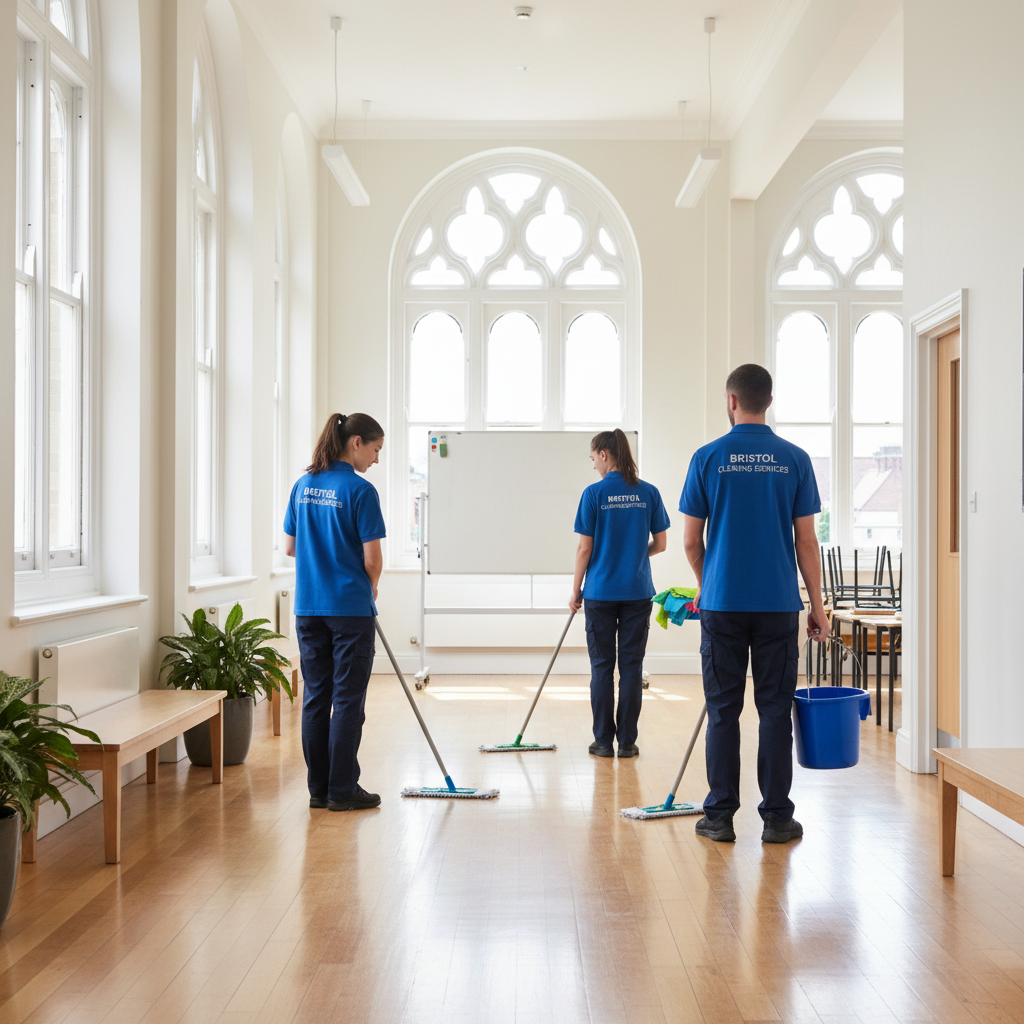
Why School Cleaning Is a Different Challenge Altogether
Running a clean school is not the same as keeping a clean office. You’re dealing with hundreds of children moving through corridors, classrooms, canteens, and toilets every single day. Germs spread fast in those conditions. A norovirus outbreak, a persistent cold going around Year 4, rising absence rates — these things often trace back to hygiene gaps that could have been prevented.
For school administrators and facilities managers in Bristol, getting cleaning right means thinking about timing, frequency, the right products for different surfaces, and compliance with health and safety standards. It’s a lot to manage, especially when it sits on top of everything else you’re already responsible for.
This post breaks down what good school cleaning in Bristol actually looks like, and what to consider when reviewing your current approach.
The Health Case for Professional Educational Facility Cleaning
Children’s immune systems are still developing, which makes schools one of the highest-risk environments for the spread of illness. Surfaces like door handles, light switches, shared equipment, and toilet facilities can harbour bacteria and viruses for hours — sometimes days — without proper treatment.
Public Health England data consistently shows that respiratory infections are the leading cause of school absences in the UK. While you can’t stop every child from picking up a cold, you can significantly reduce transmission rates through rigorous cleaning protocols.
That means going beyond a quick wipe-down at the end of the day. High-touch points need attention multiple times during school hours. Toilets need to be checked and cleaned at regular intervals, not just first thing in the morning. Canteen surfaces need proper sanitisation between breakfast club, morning break, and lunch.
Educational facility cleaning done properly is not just about appearances. It directly affects how many children and staff members stay healthy and in school.
What a Professional School Cleaning Schedule Actually Looks Like
There’s no single schedule that works for every school. A 200-pupil primary in Clifton has different needs from a 1,400-pupil secondary in Filton. But there are some baseline standards that apply across the board.
Daily Tasks
- Classroom floors swept and mopped or vacuumed
- Desks and hard surfaces wiped down with appropriate disinfectant
- Toilets cleaned and restocked (checking mid-day in busy schools)
- Canteen tables and food prep areas sanitised after each use period
- Entrance areas, corridors, and stairwells swept
- Bins emptied throughout the building
Weekly Tasks
- Deep clean of toilet blocks
- Thorough clean of sports halls and PE changing rooms
- Skirting boards and door frames wiped down
- Windows cleaned internally
- Kitchen deep clean (if applicable)
Termly or Seasonal Tasks
- Carpet deep cleaning in carpeted classrooms
- Hard floor stripping and resealing
- External window cleaning
- Full building audit against hygiene standards
Timing matters too. Most school cleaning happens before school starts and after pupils leave, but some tasks — particularly in canteens and toilets — need to happen during the school day. If your cleaning provider isn’t working to a structured timetable that covers both before-hours and during-day tasks, you’re missing opportunities to reduce cross-contamination.
Compliance: What Standards Apply to Bristol Schools?
The Health and Safety at Work etc. Act 1974 sets the overarching requirement: employers must keep workplaces (including schools) clean and hygienic. Beyond that, maintained schools are also subject to premises standards set out in the School Premises Regulations.
Those regulations don’t spell out every detail, but they cover things like safe water supplies, sanitation, adequate ventilation, and heating. Ofsted inspections also consider cleanliness and premises maintenance as part of their overall assessment of a school’s quality and safety. A poorly maintained school facility will be flagged.
If your school has catering facilities, Environmental Health inspections apply too. And if you have children with specific medical needs (asthma, allergies, immunosuppression), cleaning standards take on extra importance — airborne contaminants and allergens matter.
Working with a cleaning provider who understands these compliance requirements — and documents what they’ve done — takes a lot of pressure off facilities teams.
The Real Cost of Understaffed or Under-Resourced Cleaning
When schools try to cut cleaning budgets, the impact creeps up slowly. First, you notice a few corners cut. Skirting boards don’t get wiped as often. The weekly deep cleans get skipped. Then one of your staff falls ill, and suddenly no one’s checking the toilets mid-morning.
What follows? Higher absence rates among pupils and staff. Parents getting complaints about hygiene standards. Potentially, a poor Ofsted comment or an Environmental Health warning if canteen standards slip.
Professional school cleaning services in Bristol aren’t a luxury — they’re an investment in your school’s health, safety, and reputation. Creating the Perfect Commercial Cleaning Schedule for Your Office applies to schools too: you need a clear brief, consistent staffing, the right equipment, and regular communication between your school and your cleaning team.
What to Look For in a School Cleaning Partner
Not all commercial cleaning companies are equally equipped to handle educational facilities. When evaluating a potential cleaning partner, ask about:
- Experience with schools: Do they have references from other educational settings?
- Training: Are their staff trained in infection control and safeguarding?
- Flexibility: Can they work around your school’s timetable and special events?
- Communication: Do they have a named contact and regular check-ins?
- Equipment and products: Do they use EPA-approved disinfectants and equipment that works for schools?
- Compliance tracking: Do they log what’s been cleaned and when?
If you’d like to explore what professional school cleaning might look like for your facility, get in touch with us for a free quote. We’ll walk through your specific needs and put a plan in place that keeps your students and staff safe.