
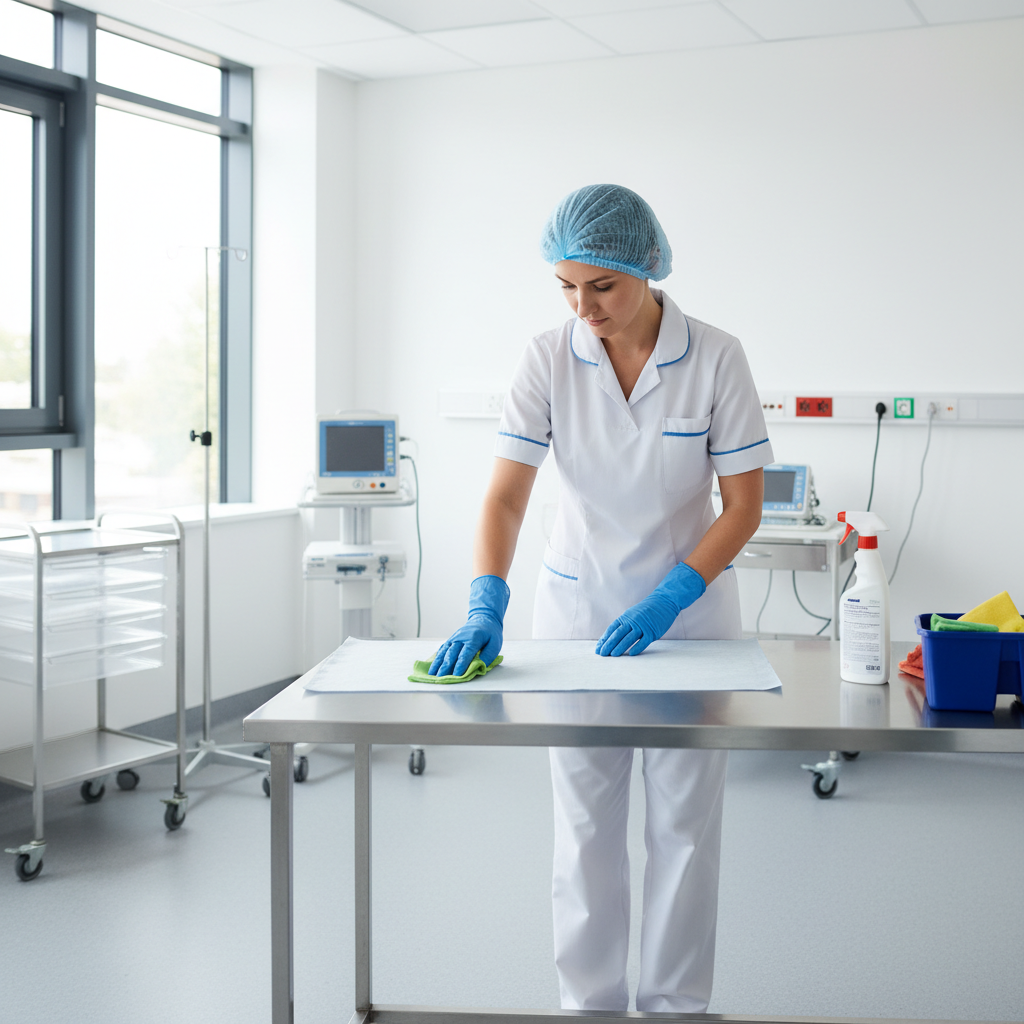
Why Cleaning Is Never Just Cleaning in a Healthcare Setting
In most workplaces, a clean environment is about comfort and professionalism. In a healthcare facility, it’s about patient safety. An inadequately cleaned care home or clinic can lead to infection outbreaks, failed inspections, and — most seriously — genuine harm to the people in your care.
The Care Quality Commission (CQC) doesn’t treat cleanliness as a box-ticking exercise. Inspectors look at infection prevention and control as a core part of their assessment, and the evidence they gather is very practical: are surfaces clean, are cleaning records up to date, are staff following hygiene protocols, and is the environment genuinely safe for residents and patients?
For healthcare managers and care home owners across Bristol, staying on the right side of those standards takes more than a mop and a spray bottle. It takes a structured approach — and often, the right professional cleaning partner.
What CQC Actually Looks For
CQC inspections assess care homes and clinics against five key questions: are services safe, effective, caring, responsive, and well-led? Cleanliness feeds directly into the ‘safe’ category, but it also touches ‘well-led’ — because poor cleaning records suggest a management team that isn’t on top of its responsibilities.
When inspectors visit, they typically check:
- Whether the facility has a written cleaning schedule and whether it’s being followed
- Evidence of regular deep cleans, especially in high-risk areas like bathrooms, sluice rooms, and clinical spaces
- How the facility handles spillages and bodily fluid incidents
- Whether colour-coded cleaning equipment is used correctly (to prevent cross-contamination between areas)
- Staff training records related to infection control and cleaning procedures
- Whether cleaning products meet the required standards for healthcare environments
A common problem is that many facilities have policies on paper that aren’t reflected in practice. CQC inspectors are good at spotting that gap.
The Specific Challenges of Care Home Cleaning in Bristol
Bristol’s care home sector is varied — from large purpose-built facilities in Southmead and Filton to smaller residential settings in Clifton and Redland. The size and layout of a building affects how cleaning needs to be managed, but the standards don’t change based on square footage.
Care homes face some specific challenges that clinics don’t always deal with to the same degree. Residents may be incontinent, may have infections that require isolation protocols, and may spend the majority of their time in their rooms — which means those rooms need more frequent attention than a standard commercial office space.
There’s also the emotional dimension. This is someone’s home. Cleaning teams working in care homes need to be trained not just on hygiene protocols but on how to work respectfully around residents. Banging around with equipment during someone’s rest time, or failing to knock before entering a room, matters. It affects dignity and wellbeing, which CQC also assesses.
For care home cleaning services to genuinely work, the team doing the cleaning needs to understand the environment they’re working in — not just turn up with generic commercial cleaning gear.
How Professional Healthcare Cleaning Differs from Standard Commercial Cleaning
Not all commercial cleaners are equipped to work in healthcare settings, and it’s worth being clear about that distinction before you sign a contract.
Healthcare facility cleaning requires different products, different protocols, and different training. The cleaning products used in hospitals and care homes need to meet specific microbial efficacy standards — they’re not the same as what you’d use in an office.
Staff need training on:
- Infection prevention and control (IPC) principles
- How to handle biological waste and bodily fluids safely
- Which areas are high-risk and need different cleaning frequencies
- How to use and dispose of personal protective equipment correctly
- The specific layout and needs of healthcare environments
When you bring in a healthcare-specialist cleaning company, you’re not just getting better equipment — you’re getting a team that understands the regulatory environment and can help you stay compliant without adding layers of management on top of your already stretched staff.
Practical Steps to Ensure CQC-Ready Cleaning in Your Bristol Facility
Even if you already have cleaning staff in place, there are several concrete steps you can take to ensure your environment meets CQC standards:
1. Create a detailed cleaning schedule. This should specify what gets cleaned, when, by whom, and using what product. It needs to be realistic — an over-ambitious schedule that doesn’t happen in practice is worse than none at all. High-risk areas like bathrooms and clinical spaces should be cleaned more frequently than general communal areas.
2. Keep records. CQC will ask to see evidence that cleaning has actually taken place. This doesn’t have to be complicated — a simple checklist with date and initials is enough, but it has to exist and it has to match reality.
3. Invest in colour-coded equipment. This prevents cross-contamination. Don’t mix the mop you use in the toilet block with the one you use in the dining area. This is a basic infection control principle and CQC inspectors notice.
4. Train your team regularly. Whether your cleaning is done in-house or outsourced, the people doing the work need to understand why the protocols matter. Annual training isn’t enough if the environment changes or new staff join.
5. Have a protocol for incidents. What happens when there’s a blood spillage, a bodily fluid incident, or a confirmed infection in a room? Your team needs to know, and you need documentation showing they’ve been trained on it.
6. Deep clean regularly. Alongside daily cleaning, your facility should have scheduled deep cleans that get into areas daily cleaning doesn’t reach — under beds, behind equipment, skirting boards, high surfaces. CQC expects to see evidence of this.
One option many Bristol healthcare facilities have found helpful is to partner with a professional healthcare facility cleaning service. This takes the operational burden off your internal team and ensures that every cleaning task is done by people trained specifically for that environment.
The Cost of Getting Cleaning Right — vs. the Cost of Getting It Wrong
Good healthcare facility cleaning isn’t cheap. It costs more than standard commercial cleaning because the standards are higher, the products are more specialist, and the training requirements are more substantial.
But the cost of getting it wrong is much higher. A CQC inspection that results in a downgrade costs your facility credibility, makes recruitment and retention harder, and can directly impact occupancy rates. An infection outbreak in a care home can result in serious harm to residents, regulatory investigation, and legal liability.
In that context, investing in professional, compliant cleaning isn’t a cost centre — it’s a safeguarding measure.
There are also cost-effective ways to implement professional cleaning without overhauling your entire operation. Many healthcare facilities opt for a hybrid approach: professional deep cleans on a regular schedule combined with competent in-house daily cleaning managed to the same protocols.
Getting Started with CQC-Compliant Cleaning
If you’re a healthcare manager or care home owner in Bristol and you’re concerned about your current cleaning arrangements, the first step is to audit where you are against CQC expectations. Do you have a detailed cleaning schedule? Is it being followed? Are your staff trained? Do you have documentation of it?
From there, the gaps become clearer, and you can plan whether that’s additional training, tighter management of existing staff, or a shift to professional provision.
For a consultation about how to structure your healthcare facility cleaning to meet CQC standards — without adding unnecessary complexity or cost — get in touch with Clean Bees. We’ve worked with dozens of Bristol healthcare facilities and care homes to get their cleaning compliant, documented, and actually achievable.
Your next CQC inspection doesn’t need to be a source of anxiety. With the right cleaning structure in place, it can be something you walk into knowing your environment meets the standards. And more importantly, you’ll know your residents and patients are in a genuinely safe, well-maintained space.