
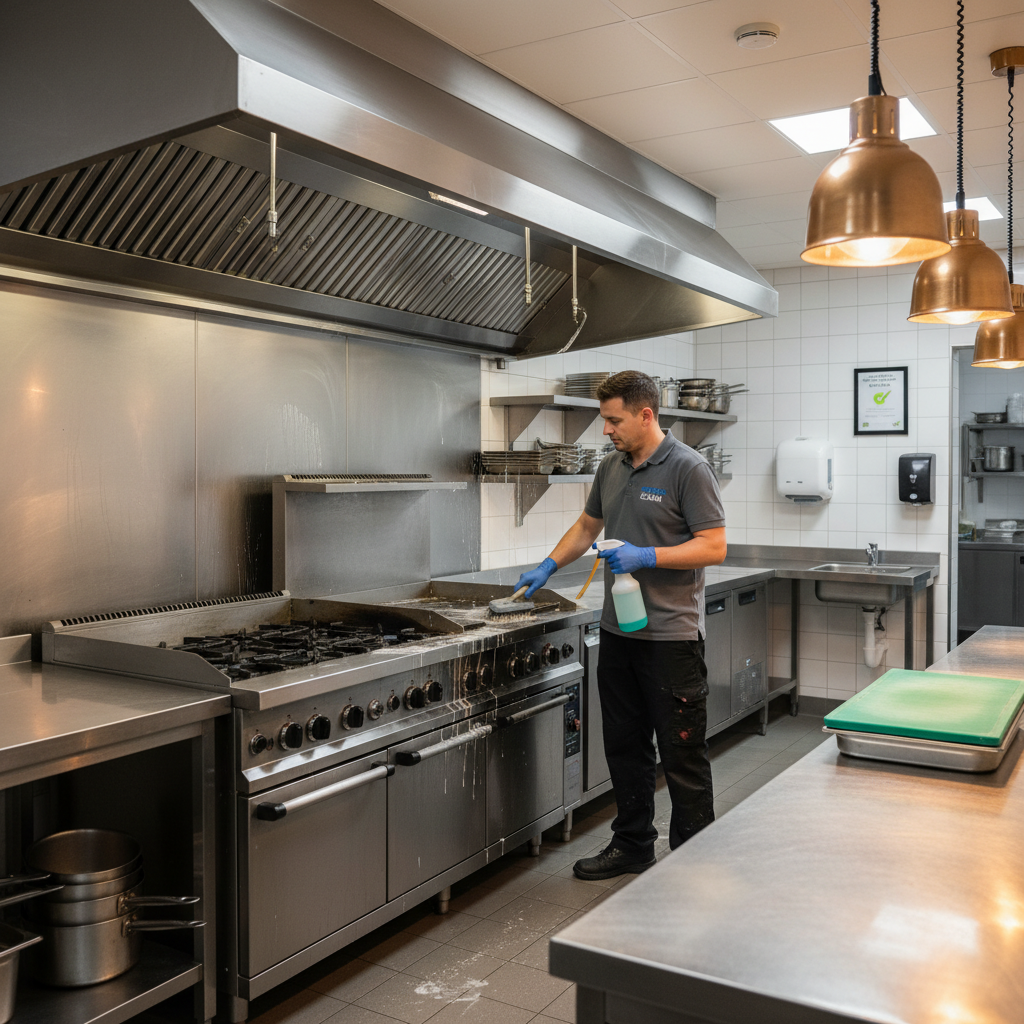
Running a restaurant or café in Bristol? You already know the Food Standards Agency doesn’t mess around when it comes to hygiene ratings. One slip-up and that 5-star rating you’ve worked so hard for can tumble faster than a dropped soufflé.
Why Commercial Kitchen Cleaning Isn’t Just ‘Nice to Have’
Health inspectors aren’t looking for spotless—they’re looking for safe. But here’s the thing: a properly cleaned commercial kitchen actually delivers both. The trouble is, standard cleaning rotas often miss the areas that matter most during inspections.
The FSA’s Key Focus Areas
When an inspector walks through your kitchen, they’re zeroing in on specific trouble spots:
Ventilation and extraction systems—Grease buildup in range hoods and ducts isn’t just a fire hazard (though it absolutely is). It’s a breeding ground for bacteria and a dead giveaway that your deep cleaning schedule needs work.
Surfaces and food prep areas—Cross-contamination between raw and cooked foods kills. Your cleaning protocols need to eliminate this risk completely, not just “reduce it enough.”
Floor drainage and waste areas—Often overlooked, but inspectors always check. Standing water, blocked drains, and poorly managed waste attract pests and accumulate pathogens.
Storage areas and fridges—Temperature control is critical, but so is cleanliness. Mold in walk-in fridges is an instant fail.
What Deep Kitchen Cleaning Actually Involves
Crediting a £15/hour floor mop at the end of service isn’t going to cut it for compliance. Real commercial kitchen cleaning includes:
- Sodium hydroxide degreasing of extraction systems and ventilation hoods
- Commercial-grade steam cleaning of all food contact surfaces
- Sterilization of storage areas, shelving, and refrigeration units
- Deep floor scrub and drainage sanitation
- Hot water pressure washing of external waste areas
This isn’t stuff you trust to casual labour. It requires proper equipment, trained staff, and cleaning agents that are effective enough for commercial kitchens while remaining food-safe.
Bristol’s Specific Requirements
Bristol City Council’s environmental health team conducts regular inspections across the city’s 1,800+ food businesses. Their approach is risk-based—high-risk establishments (those preparing raw meats, high-volume operations, those with previous poor ratings) get inspected more frequently.
The key local regulations you need to meet include:
- Registration with Bristol City Council at least 28 days before opening
- Maintaining a documented food safety management system (usually Safer Food, Better Business)
- Demonstrable cleaning schedules and records—this is where professional support becomes invaluable
- Appropriate pest control contracts with documented inspections
How Regular Cleaning Contracts Protect Your Business
Having a professional hospitality cleaning service on contract isn’t an expense—it’s insurance. Here’s what proper commercial kitchen cleaning prevents:
- EHO visit failures leading to closure or downgraded ratings
- Pest infestations that can shut you down for weeks
- Fire risks from grease accumulation in extraction systems
- Staff illness and associated sick pay claims
- Food poisoning claims that can destroy a business
A detailed cleaning schedule also demonstrates to insurers and landlords that you’re taking your obligations seriously—a useful defence if things ever go wrong.
DIY vs Professional Kitchen Deep Cleaning
Some restaurant owners think they can manage deep cleaning in-house. Here’s the reality: your kitchen staff are trained to cook, not clean. They don’t have the equipment, the chemicals, or the training to tackle extraction systems, reach ceiling fixtures, or properly sterilize drainage.
More critically, they don’t have the time. During service, your kitchen is flat out. Before opening, you’re prepping. The only window for deep cleaning is overnight—and that’s not when you want exhausted staff handling corrosive degreasing agents.
Learn more about the true cost difference between in-house and professional cleaning—the economics might surprise you.
Building a Cleaning Schedule That Satisfies Inspectors
If an EHO visited tomorrow, could you produce documented cleaning schedules, COSHH data sheets for all chemicals used, and training records for staff handling them? Most Bristol restaurant owners can’t. That’s the gap a professional service fills.
At Clean Bees, we provide:
- Scheduled deep kitchen cleaning outside service hours
- Full COSHH documentation and risk assessments
- Trained staff with food safety awareness certification
- Before/after photographic evidence for your records
- Direct liaison with EHOs if questions arise post-clean
Ready to Get Your Kitchen Compliant?
Don’t wait for a bad inspection to fix your cleaning protocols. Whether you’re preparing for a routine EHO visit, recovering from a downgrade, or opening a new establishment, proper commercial kitchen cleaning is non-negotiable.
Get a quote for professional hospitality cleaning tailored to your kitchen’s size, usage, and compliance needs. We’ll assess your current setup and recommend a cleaning schedule that keeps your hygiene rating where it belongs—at the top.