
The Ultimate Office Cleaning Checklist for Facilities Managers
If you’re managing a facility in Bristol, you know that a clean office is about more than just a tidy desk. It’s about the health of your team, the first impression you give to clients, and frankly, your own peace of mind. But keeping track of what needs to be cleaned and when can feel like a full-time job in itself. That’s why we’ve put together this comprehensive checklist. Whether you manage a small creative hub in Stokes Croft or a large corporate headquarters in Temple Quay, this guide will help you stay on top of your office hygiene.
Why a checklist is your best friend
I’ve seen it happen dozens of times. A facilities manager walks through the office and everything looks “fine” on the surface. But then a client visits, and they notice the dust on top of the monitors or the grime building up in the kitchen corners. Without a clear system, things get missed. A checklist isn’t just a list of chores; it’s a tool for accountability. It ensures that your cleaning team (whether in-house or contracted) knows exactly what’s expected of them, every single shift.
It also helps you answer that age-old question: how often should an office be cleaned? The truth is, it depends on your foot traffic and the nature of your business, but having a baseline checklist ensures that even on your busiest days, the essentials are handled.
Daily Cleaning Essentials: The Non-Negotiables
Daily cleaning is your frontline defence against germs and clutter. These are the tasks that, if skipped for even one day, become immediately obvious to everyone in the building.
Workspaces and Desks
- Empty all waste and recycling bins.
- Wipe down and disinfect desk surfaces (be careful with sensitive equipment).
- Clean and disinfect high-touch points like phone handsets, keyboards, and mice.
- Dust monitors and computer towers.
- Tidy up any loose papers or clutter left in common areas.
Kitchens and Breakrooms
- Wipe down all worktops and tables with food-safe disinfectant.
- Clean out the sink and remove any leftover food scraps.
- Wipe the exterior of the microwave, fridge, and coffee machine.
- Empty the dishwasher and put away clean dishes.
- Sweep and mop the floor.
- Replenish stocks of tea, coffee, milk, and sugar.
Toilets and Washrooms
- Clean and disinfect all toilets, urinals, and sinks.
- Wipe down mirrors and splashbacks.
- Sweep and mop the floors with a strong disinfectant.
- Refill soap dispensers, paper towels, and toilet rolls.
- Empty and disinfect sanitary bins and general waste bins.
Common Areas and Entrances
- Wipe down glass entrance doors to remove fingerprints and smudges.
- Vacuum high-traffic carpeted areas (reception, main walkways).
- Sweep and mop hard flooring in the entrance and hallways.
- Tidy up magazines, brochures, or seating in the reception area.
Maintaining this daily rhythm is what keeps a workspace professional. If you find your current team is struggling to keep up with these basics, it might be time to look at professional office cleaning services in Bristol that can guarantee this level of consistency every single day.
Weekly Tasks: The Deeper Details
Weekly tasks are about catching the things that don’t necessarily need a daily scrub but will cause problems if left for too long. This is where we start looking at the “second tier” of cleanliness.
Deep Floor Care
- Vacuum all carpeted areas thoroughly, including under desks and along skirting boards.
- Buff or polish hard floors if needed.
- Spot clean any stains or spills on carpets.
Dusting and Surfaces
- Dust all window sills, ledges, and frames.
- Wipe down skirting boards and the tops of door frames.
- Clean the tops of lockers, cupboards, and filing cabinets.
- Dust wall-mounted art, clocks, and signs.
Windows and Glass
- Clean internal glass partitions and windows to remove streaks.
- Wipe down mirrors in hallways or elevators.
Kitchen Deep Clean
- Clean the interior of the microwave thoroughly.
- Wipe down the inside of the fridge (after asking staff to remove old items!).
- De-scale kettles and coffee machines.
Monthly Maintenance: Preventing Long-Term Grime
Once a month, you should go beyond the visible surfaces and tackle the hidden areas. This prevents that “stale” office smell and keeps the environment feeling fresh.
- Vacuum or steam clean upholstered furniture (chairs, sofas in reception).
- Dust high-level surfaces like ceiling vents, light fixtures, and fans.
- Deep clean and disinfect all rubbish and recycling bins.
- Clean internal windows from top to bottom.
- Check and clean air conditioning filters.
How to implement this checklist effectively
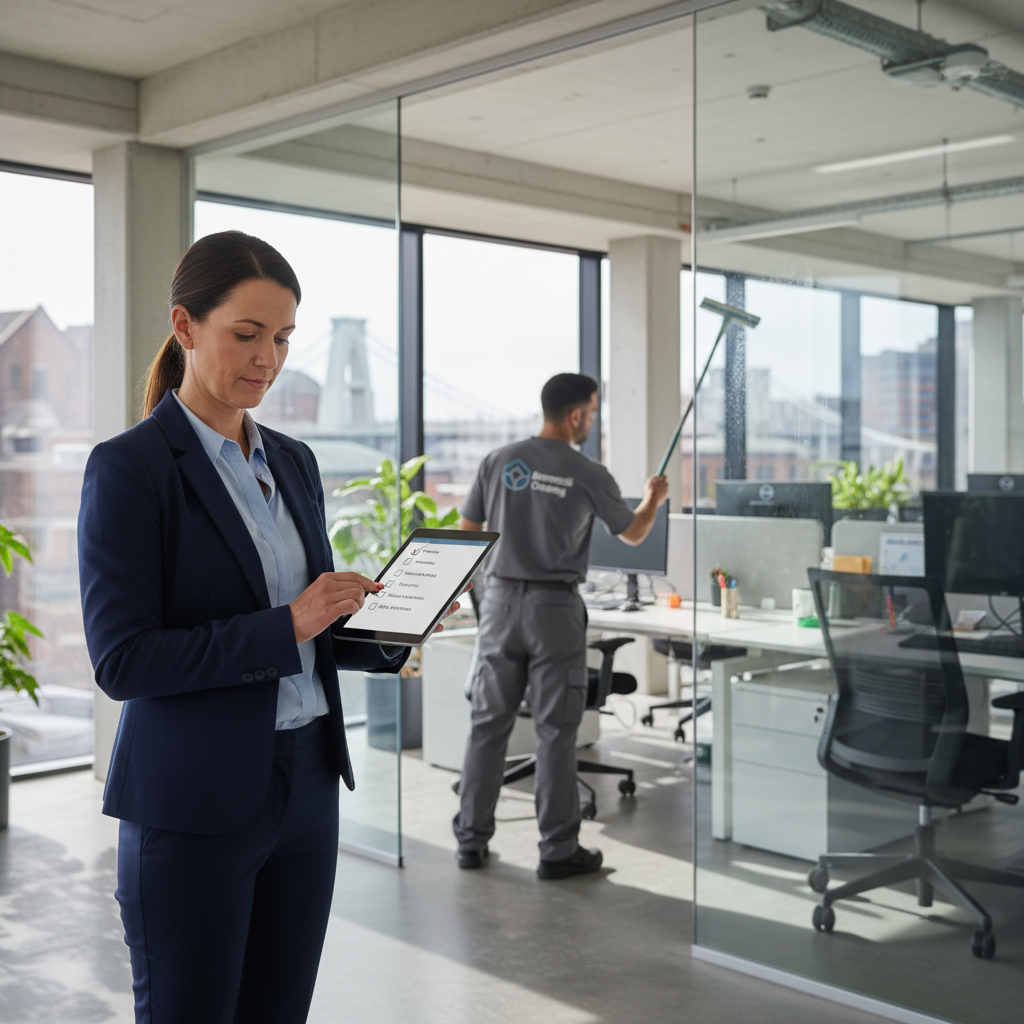
Putting a checklist on a piece of paper isn’t enough. You need a way to track it. Many modern facilities managers use apps or digital tools where cleaners can “check off” tasks as they go. This gives you a live view of what’s happening in your building without you having to walk the floors every hour.
It’s also important to communicate with your staff. If the fridge is going to be cleaned on the last Friday of every month, let them know! It prevents those awkward moments when someone’s lunch disappears, and it shows the team that you’re actively investing in their workspace.
The Benefits of Consistency
When an office is consistently clean, people notice. Not in a “wow, it’s so clean” way, but in the way they feel more comfortable and productive. A cluttered, dusty office is a distraction. A clean one is a blank canvas for good work. Plus, in a city like Bristol where competition for talent is high, having a high-standard office environment is a genuine perk that staff appreciate.
If managing all of this sounds like a headache you’d rather avoid, we can help. Our team takes the burden off your shoulders, following a tailored checklist that meets the specific needs of your building. You can simply fill out our commercial enquiry form to get a clear, no-nonsense quote for your office.
Conclusion
Managing an office is a massive task, and cleaning is just one piece of the puzzle. But by using a structured checklist—daily, weekly, and monthly—you can ensure that nothing falls through the cracks. It protects your equipment, keeps your staff healthy, and makes sure that first impression is always a positive one. Take this list, tweak it for your space, and watch the difference it makes to your daily operations.