
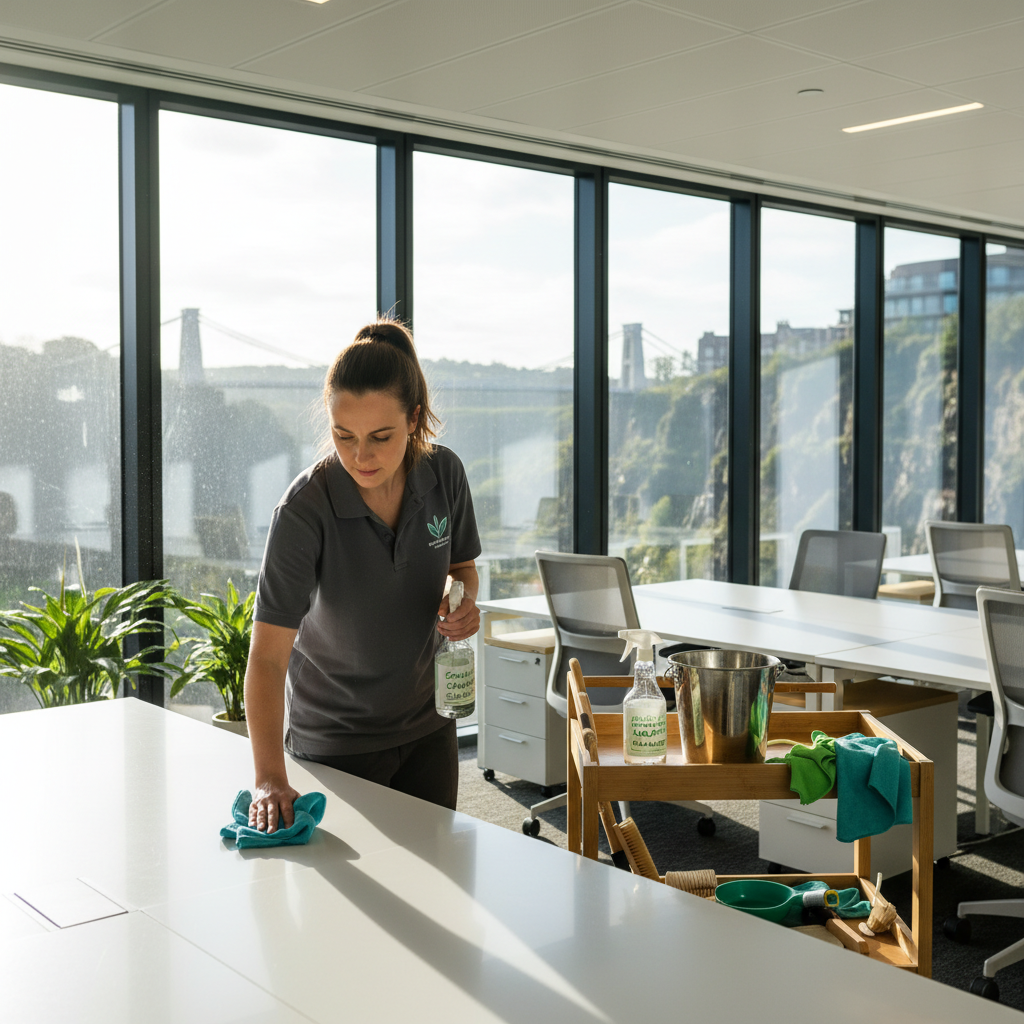
Sustainability isn’t a buzzword anymore. For Bristol businesses, it’s becoming part of how decisions get made — from the suppliers you choose to how your premises are maintained. And while it’s easy to focus on energy use or packaging, commercial cleaning is one area that often gets overlooked.
The good news is that switching to greener cleaning practices doesn’t mean sacrificing standards. In fact, the two tend to go hand in hand. Here’s a practical look at what eco-friendly commercial cleaning actually involves, and why it’s worth paying attention to.
Why it matters for Bristol businesses
Bristol has been ahead of the curve on sustainability for years. The city was the first UK city to be named European Green Capital back in 2015, and that culture hasn’t gone away. Businesses here are increasingly expected to demonstrate environmental responsibility — not just by customers, but by staff, investors, and procurement teams.
For facilities managers and business owners, cleaning is a daily operation. The products used, the water consumed, the packaging generated — it all adds up. A typical office might get cleaned five days a week, 48 weeks a year. That’s a lot of chemical spray going down the drain.
Making your cleaning contract greener is one of the more straightforward ways to reduce your environmental impact without disrupting operations. And increasingly, it’s what clients and tenants are asking for.
What makes a cleaning product genuinely eco-friendly?
This is where a lot of confusion creeps in. “Green” and “natural” on a label don’t mean much without some context. There are a few things worth looking for:
- Biodegradable formulas — Products that break down naturally after use, rather than persisting in waterways or soil.
- Concentrated solutions — These require far less packaging and cut down on transportation emissions. A single litre of concentrate can replace dozens of ready-to-use bottles.
- Low-VOC formulas — Volatile organic compounds contribute to indoor air pollution. Lower VOC products are better for your staff as well as the environment.
- Refillable systems — Some cleaning suppliers now operate closed-loop refill systems, collecting empty containers and refilling them rather than sending them to landfill.
A cleaning company worth working with should be able to tell you exactly what’s in their products and why they’ve chosen them. If they can’t, that’s a fair sign the “eco” claims aren’t backed by much substance.
Microfibre — a small change, a big difference
One of the most effective shifts in commercial cleaning over the past decade has been the move to microfibre cloths and mops. It sounds minor, but the impact is significant.
Microfibre works by physically lifting and trapping dirt, bacteria, and debris — rather than just pushing it around with chemicals. That means less product is needed to achieve the same result. Studies have found microfibre cleaning can reduce chemical use by up to 90% compared to conventional methods, and water use drops substantially too.
They’re also more durable than disposable alternatives. A quality microfibre cloth can be washed and reused hundreds of times before it needs replacing, which cuts waste considerably.
For facilities managers running cleaning schedules across multiple areas, microfibre systems also make it easier to prevent cross-contamination — colour-coded cloths for different zones (toilets, kitchens, desks, etc.) are standard practice with professional providers.
Water efficiency in commercial cleaning
Water is another area where professional cleaning has come a long way. Traditional mopping uses a lot of water — and the water gets dirty fast, meaning it often gets changed frequently or, worse, spread around a floor long after it’s stopped being effective.
Modern flat mop systems use significantly less water per clean, and they’re designed so the mop head can be changed out quickly, keeping the cleaning solution fresh throughout the job. Steam cleaning, where appropriate, is another option — effective at sanitising surfaces without any chemicals at all, using only heat and water.
For businesses in sectors like healthcare, food service, or education, these approaches aren’t just environmentally preferable — they often result in better hygiene outcomes too.
Reducing waste from your cleaning contract
Single-use plastic is a genuine issue in commercial cleaning. Disposable gloves, paper towels, plastic spray bottles — in a busy office or commercial building, these can generate a surprising amount of waste week after week.
Greener alternatives include:
- Reusable gloves for routine cleaning tasks
- Microfibre cloths instead of paper towels wherever possible
- Concentrated products in bulk containers rather than individual plastic bottles
- Recycled or compostable bin liners
This is worth raising with your current or prospective cleaning provider. Ask them what their waste policy looks like and whether they’re actively working to reduce single-use plastic in their operations. If it’s something they haven’t thought about, that tells you something.
Green cleaning and indoor air quality
Here’s something that doesn’t get enough attention: the chemicals used to clean your office end up in the air your staff breathe. Conventional cleaning products often contain fragrances, bleach, ammonia, and other compounds that can cause headaches, respiratory irritation, and long-term health issues with repeated exposure.
Switching to fragrance-free or low-chemical products can make a meaningful difference to the working environment — particularly in enclosed or poorly ventilated spaces. If you’ve ever noticed that slightly chemical smell after a clean, or had staff mention headaches, it’s worth looking at what’s being used.
We’ve written before about cost-effective commercial cleaning solutions that work for Bristol businesses — and many of the most economical approaches also happen to be the greener ones. Concentrated products cost less per use, microfibre reduces consumable spend, and smarter scheduling means less product used overall.
What to ask when reviewing your cleaning contract
If sustainability is a priority for your business, it’s worth building it into your cleaning brief. Here are some practical questions to ask:
- What cleaning products do you use, and are they biodegradable?
- Do you use microfibre systems, or disposables?
- How do you handle packaging and waste from cleaning materials?
- Can you provide an eco-friendly specification if required?
- Do your staff receive training on sustainable cleaning methods?
A professional cleaning company should be able to answer these clearly. It’s also reasonable to ask for a product list or safety data sheets — these will tell you more about what’s actually going into your building than a marketing claim will.
Getting the spec right from the start
Sustainable cleaning works best when it’s built into the contract from day one, rather than bolted on as an afterthought. That means agreeing on product standards, waste management expectations, and any environmental certifications you want the provider to hold — before the contract is signed.
Our commercial cleaning services in Bristol are designed to be flexible around client requirements, including sustainability specifications. Whether you’re looking to reduce chemical use, cut packaging waste, or simply want a provider who takes environmental standards seriously, it’s worth having that conversation upfront.
Bristol businesses are under real pressure to clean up their act — in every sense. The cleaning industry has moved quickly in recent years, and there are now genuinely good options that deliver on both hygiene and environmental performance. You don’t have to choose one over the other.
If you’re reviewing your commercial cleaning contract and want to factor in sustainability, get in touch with us through our commercial enquiry form and we can put together a specification that works for your building and your environmental commitments.