
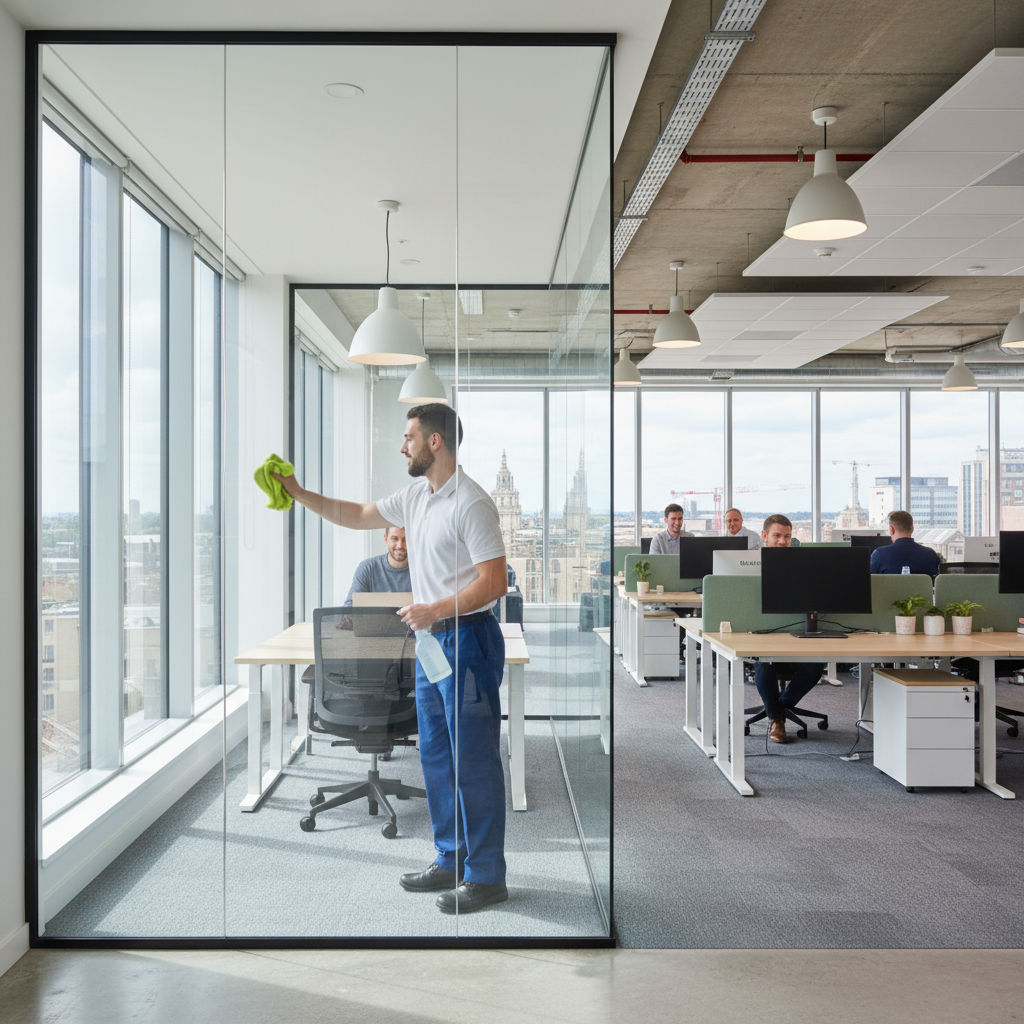
Sick days cost UK businesses thousands every year. The average employee takes 5.8 days off sick annually, and while some of that is unavoidable, a surprising chunk of it comes down to the working environment — specifically, how clean it is.
If you manage a commercial building or run a business in Bristol, this isn’t just a hygiene conversation. It’s a bottom-line one.
The link between workplace cleanliness and employee illness
Offices are surprisingly effective at spreading germs. Shared keyboards, door handles, kitchen surfaces, and lift buttons are all contact points that can transfer bacteria and viruses from one person to dozens within hours. A 2020 study by the University of Arizona found that a single contaminated surface in an office can spread to 50% of other surfaces and employees within four hours.
Common culprits include:
- Keyboards and mice — typically carry more bacteria than a toilet seat
- Phone handsets — one of the least-cleaned items in any office
- Kitchen appliances — especially the kettle handle, fridge door, and microwave buttons
- Meeting room tables — high-traffic surfaces that often get a quick wipe at best
- Toilet flush handles and taps — the obvious ones, but frequently under-cleaned
Regular surface disinfection, combined with a proper cleaning schedule, directly reduces the spread of respiratory infections, gastrointestinal bugs, and skin conditions in the workplace. That’s not a bold claim — it’s what the evidence consistently shows.
What sick days actually cost your business
Let’s put some numbers on it. According to the CIPD’s Health and Wellbeing at Work report, absence costs UK employers an average of £783 per employee per year. For a business with 30 staff, that’s over £23,000 annually — before you factor in the knock-on effects like reduced productivity, overtime for covering colleagues, and the impact on team morale.
Now consider that a thorough commercial cleaning contract for a mid-sized Bristol office typically runs at a fraction of that cost. The maths isn’t complicated.
Beyond the direct cost, there’s also the issue of presenteeism — when employees come in sick because they feel they have to. They’re less productive, more error-prone, and often make their colleagues ill too. A cleaner office won’t fix every element of workplace wellbeing, but it removes one of the most preventable causes of illness from the equation.
Where most office cleaning falls short
A lot of businesses have some form of cleaning in place — usually a cleaner who comes in to hoover, empty bins, and wipe surfaces. That’s a start, but it’s rarely enough.
The gaps tend to fall in a few consistent areas:
- Touch points are missed. Light switches, door handles, chair armrests, and shared equipment often go days or weeks without proper disinfection.
- Kitchen areas get a surface clean, not a deep clean. The inside of the microwave, the bottom of the bin, behind the kettle — these build up quickly and become breeding grounds for bacteria.
- Bathroom cleaning is too infrequent. In a busy office, once-a-day cleaning isn’t sufficient. High-use bathrooms need attention multiple times daily.
- There’s no documented standard. Without a checklist and accountability, it’s hard to know whether cleaning is actually being done to a consistent level.
This is where a professional commercial cleaning service makes a real difference — not just in what gets cleaned, but in how it’s done, how often, and with what products.
What a proper commercial cleaning contract looks like
A good commercial cleaning contract isn’t a vague agreement to “keep the office tidy.” It sets out exactly which areas are cleaned, at what frequency, and to what standard. It should include:
- A detailed cleaning schedule covering daily, weekly, and periodic tasks
- Specific product and equipment standards (including appropriate disinfectants for different surfaces)
- Clear accountability — who’s responsible for what, and how issues are raised
- Regular quality checks, not just a signed-off sheet
At Clean Bees, we use Xota — our own client portal system — to give businesses real-time visibility of cleaning activity. Every session is logged with timestamps and photo evidence, so you can actually see what’s been done rather than just hoping it was. For facilities managers who need to demonstrate compliance or just want peace of mind, it’s a practical tool rather than a gimmick.
The difference between reactive and preventative cleaning
Most workplace illness spikes happen in autumn and winter, which is when businesses suddenly start thinking about hygiene. By that point, the habits are already set and the germs are already moving around.
Preventative cleaning works differently. It treats high-risk surfaces consistently throughout the year, not just when there’s a bug going around. That means:
- Anti-bacterial treatments on high-touch surfaces as standard, not just during flu season
- Scheduled deep cleans before and after periods of high occupancy (like returning from the Christmas break)
- Air quality considerations — dust, mould spores, and VOCs from cleaning products all affect respiratory health if not managed properly
This approach takes more planning upfront, but it keeps absences lower and avoids the expensive scramble of trying to contain an outbreak once it’s already spreading through the office.
What Bristol businesses should look for in a cleaning provider
If you’re reviewing your current cleaning arrangements — or setting up something new — these are the things worth asking about:
- Do they offer a written scope of works? Any decent provider should be able to give you a clear, itemised list of what’s included.
- What products do they use? You want disinfectants that are effective against common viruses and bacteria, not just cleaning agents that make things look clean.
- How do they handle quality control? Ask how they monitor standards between visits — not just what their process is on paper.
- Are their staff trained and vetted? Particularly relevant if they’ll be working in your building outside of business hours.
- Can they scale with your needs? If your headcount changes, or you need an emergency deep clean, can they respond quickly?
These aren’t difficult questions, but the answers tell you a lot about whether a cleaning company operates professionally or just shows up and hopes for the best.
Reducing sick days isn’t complicated, but it does take consistency
There’s no single magic fix for workplace illness. But a clean, well-maintained office — cleaned to a proper commercial standard rather than a light residential-style tidy — removes one of the most controllable risk factors from the equation.
For Bristol businesses with commercial premises, that means putting a proper cleaning contract in place, not just relying on ad-hoc arrangements or whoever can come in cheapest.
If you’d like to talk through what a commercial cleaning contract could look like for your building, get in touch with the Clean Bees team. We work with businesses across Bristol on contracts that are tailored to the building, the occupancy, and the budget — no one-size-fits-all packages.