
Every week, we receive enquiries from church wardens, charity coordinators, and volunteer managers across Bristol with the same frustration: they’ve been let down by cleaning contractors who don’t understand their needs. Again.
Churches and charities aren’t typical commercial clients. They operate on tight budgets, have irregular schedules, and serve communities rather than customers. Many cleaning companies simply aren’t set up to handle these nuances — or worse, they quote inflated rates because they see “charity” and think “easy money.”
If you’re struggling to find reliable cleaning for your church, charity shop, community centre, or faith-based organisation, you’re not alone. Here’s why the problem is so common — and what you can do about it.
The Unique Challenges Churches and Charities Face
Unpredictable Usage Patterns
A typical office building has consistent foot traffic Monday to Friday, 9 to 5. Churches and charities don’t work that way. Sunday services bring hundreds of people through the doors in a few hours. Midweek toddler groups create messes that sit for days. Charity shops see rushes during lunch breaks and Saturdays. Christmas services, funeral bookings, and community events mean usage spikes unpredictably.
Most cleaning companies are built for consistency. They struggle with fluctuating needs and often charge premium rates for weekend or out-of-hours cleaning — precisely when churches and charities need them most.
Volunteer-Heavy Operations
Churches and charities rely on volunteers. This is their strength, but it creates challenges for cleaning coordination. Who holds the keys? Who lets the cleaners in? Who checks the work has been done properly? When your “facilities manager” is a volunteer committee member with a full-time job elsewhere, communication gaps are inevitable.
Many commercial cleaners expect a single point of contact, clear chains of command, and immediate access. They get frustrated when they have to coordinate with multiple volunteers or wait for keyholders. That frustration often translates into poor service or dropped clients.
Budget Constraints
Charities operate on donations, grants, and tight budgets. Churches often run at break-even with limited reserves. When a cleaning company quotes commercial rates designed for profitable businesses, the numbers simply don’t work.
This creates a vicious cycle. Charities settle for cheaper, unreliable cleaners who cut corners, miss sessions, or provide inadequate service. The building deteriorates. Morale drops. Eventually, someone has to sort it out — usually a volunteer spending their weekend cleaning toilets.
Heritage and Sensitivity
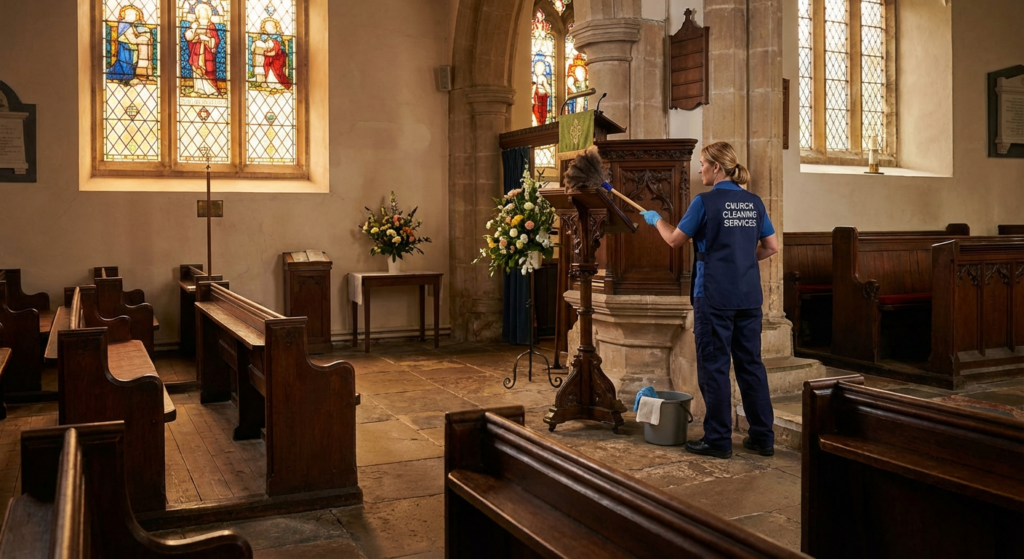
Many churches are listed buildings with historic features that require careful handling. Wooden pews, stone floors, stained glass, and antique furnishings can’t be cleaned with standard commercial equipment or harsh chemicals. One inexperienced cleaner with the wrong product can cause thousands of pounds of damage.
Charity shops often contain donated items of sentimental or actual value. A careless cleaner who moves stock around, damages displays, or throws away “rubbish” that’s actually inventory creates real problems.
Trust and Safeguarding
Churches work with vulnerable people — children in Sunday school, elderly parishioners, those struggling with addiction or homelessness. Charities often serve similar populations. Opening your building to external contractors requires confidence in their character and background.
If a cleaning company can’t provide DBS checks, references, or evidence of safeguarding awareness, most churches and charities simply can’t take the risk — regardless of how good their cleaning might be.
Why Many Cleaning Companies Get It Wrong
Understanding why churches and charities struggle requires looking at the cleaning industry from the other side. Most commercial cleaning companies are built for:
- Profitable clients who can absorb costs
- Standard business hours (Monday–Friday, daytime)
- Simple access arrangements (keyholders, alarm codes)
- Clear specifications and consistent requirements
- Buildings that are fundamentally commercial spaces
When a church or charity enquiry comes in, many cleaners default to their standard commercial model. They quote based on square footage without understanding usage patterns. They specify weekday-only cleaning when weekend services create the most mess. They expect a facilities manager who doesn’t exist.
The result is either:
- A quote so high the charity can’t afford it
- A service so inflexible it doesn’t meet actual needs
- Poor communication that leads to missed cleans and frustration
None of this is necessarily the cleaner’s fault — they’re applying their standard model to a non-standard client. But the result is the same: churches and charities feel underserved, overcharged, and frustrated.
What Good Cleaning for Churches and Charities Looks Like
After years of working with churches, charity shops, and community organisations across Bristol, we’ve learned what actually works. Here’s what to look for:
Flexible Scheduling That Matches Your Reality
Your cleaning schedule should reflect when your building actually gets dirty, not when it’s convenient for the cleaner. This might mean:
- Post-Sunday service cleaning for busy churches
- Flexible arrangements around funeral bookings or community events
- Charity shop cleaning timed around peak trading periods
- Quarterly deep cleans before Christmas or major events
- Ad-hoc cleaning after one-off functions
A cleaner who insists on rigid Monday–Friday schedules probably isn’t right for you. Look for flexibility and willingness to work around your needs.
Understanding of Volunteer-Based Operations
Good charity cleaners accept that coordination might involve multiple people. They’re patient with key arrangements. They provide clear documentation so volunteers can check work has been done. They communicate proactively when issues arise rather than expecting you to chase them.
Most importantly, they understand that your “facilities manager” has other priorities. They don’t create administrative burdens or expect immediate responses to queries.
Transparent, Fair Pricing
Charities shouldn’t pay commercial rates designed for profitable businesses. But they also shouldn’t accept poor service in the name of saving money.
Look for cleaners who:
- Offer charity rates or discounts (many do — just ask)
- Provide clear quotes without hidden extras
- Explain exactly what you’re paying for
- Offer scalable services (weekly, fortnightly, or just ad-hoc as needed)
- Don’t charge premium rates for weekend work that’s essential to your operations
Experience with Heritage and Sensitive Environments
If you’re cleaning a listed church or a charity shop with valuable stock, experience matters. The right cleaner will:
- Ask about specific materials and surfaces before starting
- Use appropriate products (no harsh chemicals on wood or stone)
- Handle furnishings and displays with care
- Carry appropriate insurance for heritage buildings
- Provide references from similar settings
Don’t be afraid to ask detailed questions about their experience with your specific type of building.
Proper Vetting and Safeguarding
Any cleaner working in churches or charities should be able to provide:
- DBS checks for all staff
- References from similar organisations
- Evidence of safeguarding training or awareness
- Professional insurance (public liability and employers’ liability)
- Clear processes for key handling and access
If a company is vague about any of these, look elsewhere. The risk isn’t worth it.
Red Flags: Cleaners to Avoid
Over the years, we’ve heard countless stories from churches and charities about cleaners who seemed perfect but turned out to be problems. Watch for these warning signs:
The “One Size Fits All” Quote
If they provide a quote based purely on square footage without asking about your usage patterns, schedule, or specific needs, they haven’t understood your situation.
Inflexibility on Timing
“We only clean weekdays, 9 to 5” is reasonable for offices. For churches that need post-Sunday cleaning, it’s a deal-breaker.
Vague About Staff Vetting
If they can’t immediately confirm DBS checks and references, or if they seem annoyed by the question, walk away.
No Charity Experience
Everyone has to start somewhere, but cleaners with no church or charity experience often underestimate the unique challenges. Look for at least some relevant background.
Reluctance to Provide Documentation
You need cleaning schedules, risk assessments, and evidence of work completed. If a cleaner finds this “too much paperwork,” they’re not suited to your needs.
What Churches and Charities Can Do to Improve Their Cleaning
Beyond finding the right contractor, there are steps you can take to make cleaning work better for your organisation:
Designate a Single Point of Contact
Even if your organisation is volunteer-heavy, try to have one person responsible for cleaning coordination. This might be a churchwarden, a charity shop manager, or a facilities volunteer. Give them authority to make decisions and ensure they have time allocated for this role.
Be Clear About Your Schedule
Provide your cleaner with advance notice of events, services, or busy periods. If they know Christmas Eve is your busiest service, they can plan accordingly. Good communication prevents surprises.
Define Your Standards
What does “clean” mean for your organisation? A church sanctuary might need weekly dusting but monthly floor polishing. A charity shop needs daily floor cleaning but weekly window cleaning. Being specific prevents disappointment.
Inspect Regularly
Someone should check the cleaning work regularly — weekly or monthly, depending on your schedule. Provide feedback promptly. Small issues addressed early don’t become big problems.
Have a Backup Plan
What happens if your regular cleaner is ill or unavailable? Who does emergency cleaning if there’s a flood or mess? Having contingency arrangements prevents crises.
The Bottom Line: You Deserve Better
Churches and charities often feel they should be grateful for any cleaning service they can afford. This mindset leads to accepting poor service, inflexible scheduling, and inadequate cleaning standards.
The reality is different. You deserve reliable, professional cleaning that meets your specific needs at a fair price. Your building serves your community. Your volunteers give their time freely. The least you should expect is a clean, well-maintained environment that supports your work.
If your current cleaning arrangement isn’t working, it can be changed. The right cleaning contractor understands churches and charities, offers flexible scheduling, provides proper documentation, and charges fair rates.
Don’t settle for “good enough for a charity.” Demand better — and keep looking until you find it.
Struggling to find reliable cleaning for your church or charity? Clean Bees works with churches, charity shops, and community organisations across Bristol. We understand volunteer-based operations, offer flexible scheduling, provide DBS-checked staff, and charge fair rates for the charity sector. Contact us to discuss how we can help.