
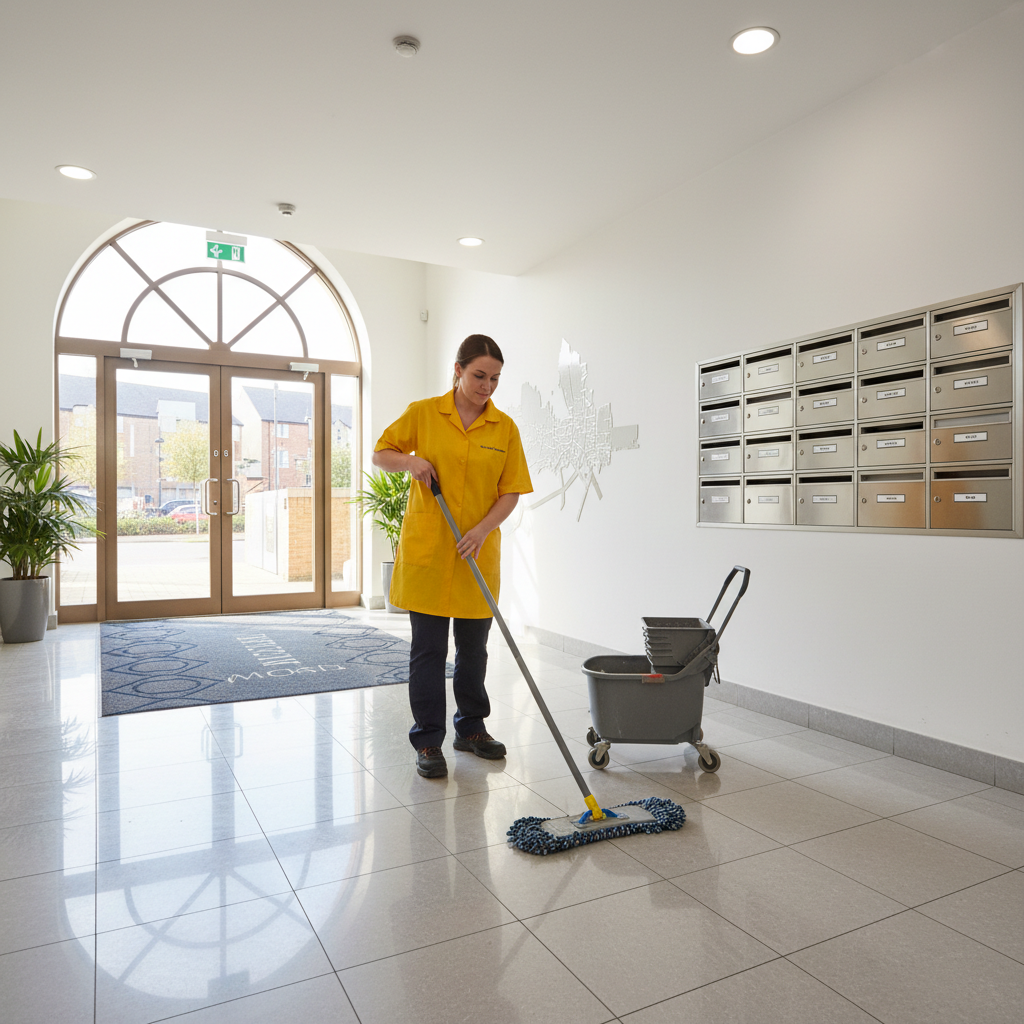
Why Block Cleaning Matters More Than Most Property Managers Realise
First impressions count. When a resident walks into their building, the state of the entrance hall, stairwell, and communal corridors tells them everything about how well their building is being managed. A clean building signals that someone is paying attention. A dirty one — bin stores that smell, lifts with scuff marks, lobby floors that haven’t been mopped in weeks — creates complaints, increases tenant turnover, and makes your job harder.
For property management companies in Bristol, keeping communal areas clean is one of those responsibilities that’s easy to deprioritise until it becomes a problem. This guide is here to help you get ahead of that.
What Block Cleaning Actually Covers
Block cleaning isn’t just vacuuming a hallway. A proper service covers the full range of communal spaces in a residential or mixed-use building. Depending on the size and type of block, that typically includes:
- Entrance lobbies and reception areas
- Stairwells and landings
- Lifts and lift lobbies
- Bin stores and refuse areas
- Bike storage rooms
- Communal corridors on each floor
- Car parks and external paths (often included in a broader contract)
- Communal laundry rooms or amenity spaces
Some buildings also have shared gardens, gym facilities, or rooftop terraces that need attention. A good cleaning contractor will survey your building and put together a scope of works that actually reflects what’s there — not a generic checklist that half doesn’t apply.
If you’re looking for a local company that does this properly, Clean Bees offers block cleaning services across Bristol tailored to the specific layout and needs of each building they work in.
How Often Should Communal Areas Be Cleaned?
This is the question we hear most often. And the honest answer is: it depends on the building.
A 12-unit residential block in Clifton with professional tenants will have different cleaning needs than a 60-unit block near the city centre with high footfall, multiple deliveries a day, and a busy bin store. There’s no universal answer.
That said, here are some rough guidelines:
- High-footfall buildings: 2–3 visits per week minimum, with entrance areas potentially needing daily attention
- Medium-sized blocks: weekly or twice-weekly cleaning usually works well
- Smaller blocks with low turnover: fortnightly visits can be sufficient if supplemented by periodic deep cleans
We’ve written a more detailed breakdown on how often communal areas should be cleaned, which is worth reading if you’re trying to work out the right schedule for a specific building.
The key is to set the frequency based on evidence — what the building actually needs — rather than defaulting to the cheapest option or copying what worked for a different block.
What to Look for in a Block Cleaning Company
Not every commercial cleaning company is set up to handle block cleaning contracts well. Residential blocks have specific demands: access control, noise considerations (especially early mornings), security, and the fact that residents are actually living in the spaces being cleaned. It’s a different environment from an office.
When evaluating cleaning companies for a block contract, look for:
- DBS-checked staff — non-negotiable for any company working in residential buildings
- Employed (not subcontracted) cleaners — gives you more accountability and consistency
- Evidence of work completed — photo verification of cleans is becoming standard with better providers
- Local presence — a Bristol-based company will be more responsive when issues arise
- Flexible scheduling — the ability to adjust frequency based on the building’s needs
- Clear communication — a named contact you can actually reach, not a call centre
It’s also worth asking how they handle one-off issues: what happens if a resident reports a spillage between scheduled cleans? What’s the process if the cleaner can’t make it one day? These are the questions that separate a decent contractor from a good one.
The Case for Photo-Verified Cleaning
One development worth paying attention to is photo-verified cleaning — where the cleaning company provides timestamped photo evidence of each visit as a matter of course.
For property managers, this is genuinely useful. It gives you a record you can share with leaseholders when they raise queries about standards. It removes the ambiguity that often leads to disputes. And it gives you objective data when you’re reviewing a contractor’s performance.
Clean Bees uses the Xota platform to deliver this — every clean is logged with photographic evidence accessible via a client portal. It’s the kind of transparency that makes ongoing contract management much simpler.
Managing Leaseholder Expectations
One of the trickier aspects of block management is the leaseholder relationship. Residents often have strong feelings about the cleanliness of shared spaces — and they’re not always wrong. But managing those expectations requires clear communication about what the service includes, how often cleans happen, and what to do if there’s a problem.
A few things that help:
- Share the cleaning schedule with residents so they know when to expect visits
- Set up a simple reporting process for issues between cleans
- Use the photo evidence from your cleaning contractor to respond to complaints with facts rather than assumptions
- Review the contract regularly — needs change, and what worked a year ago might not be right for the building today
Property managers who are transparent about cleaning standards tend to get far fewer complaints, even when standards aren’t perfect, because residents feel like they’re being kept in the loop.
Getting the Contract Right
A block cleaning contract should be specific. Vague service agreements lead to vague service delivery. Before signing anything, make sure the contract clearly sets out:
- Exactly which areas are covered
- The cleaning frequency for each area
- What products and equipment will be used
- How access will be managed
- What the process is for reporting problems
- How performance will be measured and reviewed
If you’re currently tendering for a new block cleaning contract or reconsidering your existing arrangements, it’s worth getting in touch with Clean Bees for a free, no-obligation quote. We work with property management companies across Bristol and can put together a bespoke service plan for your buildings.
Summary
Block cleaning is one of those areas of property management that tends to either run smoothly in the background or become a constant source of headaches. The difference usually comes down to having the right contractor, the right contract, and the right processes in place.
If you’re managing residential or mixed-use blocks in Bristol and want a cleaning partner that takes the work seriously — with employed staff, DBS checks, and photo-verified cleans — we’d be happy to talk.