
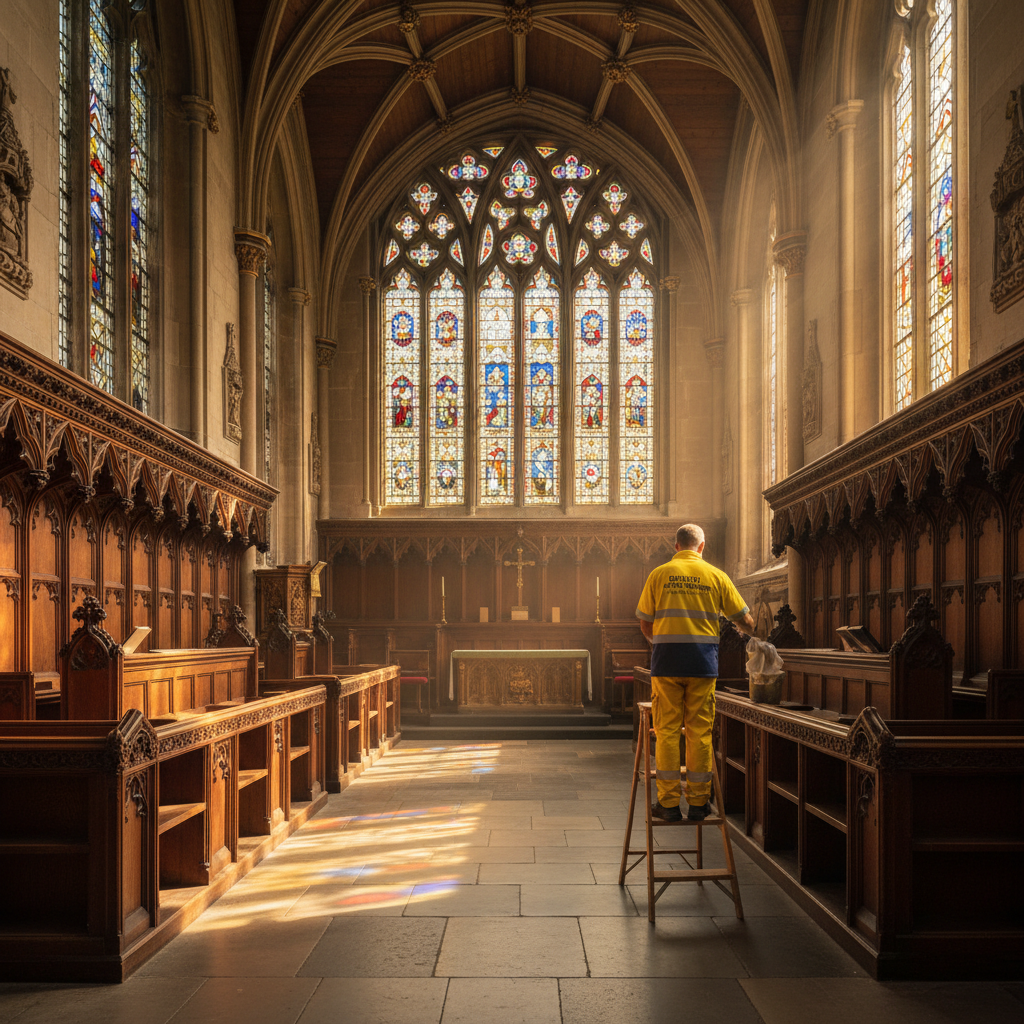
Why Church Cleaning Is Different from Regular Commercial Cleaning
Walk into most offices or retail spaces and the cleaning brief is pretty straightforward: vacuumed floors, clean surfaces, emptied bins. Churches and places of worship are a different matter entirely. You’re dealing with centuries-old stonework, delicate wooden pews, fragile textiles, irreplaceable stained glass, and spaces that may be in use seven days a week for services, community events, or private prayer.
Getting the cleaning wrong — the wrong chemical on a limestone floor, a rough cloth on gilded woodwork — can cause damage that’s expensive or impossible to reverse. And because many Bristol churches are listed buildings, there’s an additional layer of responsibility that comes with the role of churchwarden or venue manager.
This guide is for the people who carry that responsibility. It covers what good place of worship cleaning looks like, what to look for in a cleaning contractor, and some of the practical realities of keeping these spaces genuinely clean without compromising what makes them special.
The Specific Challenges of Church Cleaning in Bristol
Bristol has an incredibly varied collection of religious buildings. You’ve got medieval parish churches, Victorian nonconformist chapels, modern purpose-built worship centres, and everything in between. Each type brings its own cleaning challenges.
Older Stone Buildings
Limestone and sandstone are porous. Acidic cleaning products — even mild ones — can erode the surface over time. The same applies to stone floors, which are often original and irreplaceable. Any cleaning company working in older stone buildings needs to understand pH-neutral products and when not to use moisture at all.
Wooden Fixtures and Furnishings
Pews, choir stalls, rood screens, pulpits — many of these date back hundreds of years and have been maintained with specific waxes and oils. Using the wrong cleaning agent strips that protective layer. Good church cleaners know to dust and wipe gently, check what products have been used historically, and never improvise with multi-surface sprays.
Textiles and Soft Furnishings
Kneelers, cushions, altar cloths, and curtains often contain natural fibres that react badly to standard cleaning chemicals. Some are hand-embroidered and genuinely irreplaceable. These aren’t items you can just vacuum aggressively or steam clean without knowing the fabric content.
High-Touch Areas in Shared Spaces
Many Bristol churches operate as community hubs — hosting food banks, toddler groups, AA meetings, and much more. That means toilet facilities, kitchens, and meeting rooms that need proper commercial-grade cleaning. Hygiene standards in these spaces need to match those in any other public building. This is where understanding commercial cleaning standards in Bristol becomes genuinely relevant for church venues, not just offices.
What Good Place of Worship Cleaning Actually Looks Like
It starts with a proper survey of the building before any cleaning begins. A good contractor will walk the space with whoever manages it, identify the materials present, understand which areas are in regular use and which are rarely touched, and ask about any previous cleaning issues. That conversation saves a lot of problems later.
The cleaning schedule itself needs to reflect how the building is actually used. A church with three services on Sunday and daily community activities needs a different routine than one that’s only open for Sunday worship. Flexibility matters here — and so does discretion. Cleaners working in active places of worship need to be respectful of the environment they’re working in.
Frequency: How Often Should a Church Be Cleaned?
This depends heavily on usage. A rough guide:
- Weekly at minimum: vacuuming, dusting of pews and surfaces, cleaning of toilets and communal facilities
- Monthly: deeper clean of stone floors, woodwork, windows, and entrance areas
- Seasonally: thorough cleaning of soft furnishings, high-level dusting of beams and ledges, treatment of wooden fixtures
- Annually: full deep clean, including areas that rarely see footfall
Many churches combine a regular weekly service clean with a deeper monthly visit. The weekly clean keeps the building presentable for worshippers; the monthly clean tackles the things that build up over time.
What to Look for in a Church Cleaning Contractor
Not every commercial cleaning company is equipped for places of worship. Here’s what matters:
Experience with Sensitive Materials
Ask specifically about experience with stone, aged woodwork, and delicate textiles. Any contractor worth considering should be able to discuss the products they’d use and why — and should be willing to do a test clean in a discreet area before starting a full contract.
Trained, Vetted Staff
Churches are often unlocked spaces with valuable artefacts and trusting communities. DBS-checked, properly trained cleaning staff are a basic requirement. Check what training is provided and how staff turnover is managed.
Reliability and Consistency
One of the most common complaints from church facilities managers is cleaners who turn up irregularly or send different staff each time. A consistent team who knows the building makes a real difference — both to cleaning quality and to the sense of security for those using the space.
Insurance and Accreditations
Public liability insurance is non-negotiable. For listed buildings, it’s worth checking that the contractor carries adequate cover for accidental damage to historic fabric. Membership of a trade body like the British Institute of Cleaning Science (BICSc) is a useful indicator of professional standards.
Church Cleaning in Bristol: The Clean Bees Approach
At Clean Bees, we work with churches, chapels, and charitable organisations across Bristol. We understand that these aren’t just buildings — they’re community spaces with real significance to the people who use them, and they deserve to be treated accordingly.
Our church and charity cleaning services in Bristol are tailored to the specific requirements of each building. We carry out a full survey before any work begins, use appropriate products for the materials involved, and provide consistent, trained staff who respect the spaces they’re working in.
Whether you need a weekly service clean, a seasonal deep clean, or a full ongoing contract, we’re happy to discuss what would work for your building and your budget. Get in touch for a free commercial cleaning quote — no obligation, just a conversation about what you need.
A Final Note on Respect
It sounds obvious, but it’s worth saying: cleaning a place of worship isn’t quite the same as cleaning an office. The people who use these spaces feel strongly about them, and the buildings themselves carry history that can’t be replicated. The right cleaning contractor understands that — and brings a level of care and discretion to the work that goes beyond just getting the floors clean.
If you’re a churchwarden, facilities manager, or trustee responsible for the upkeep of a Bristol church or place of worship, we’d be glad to help.