
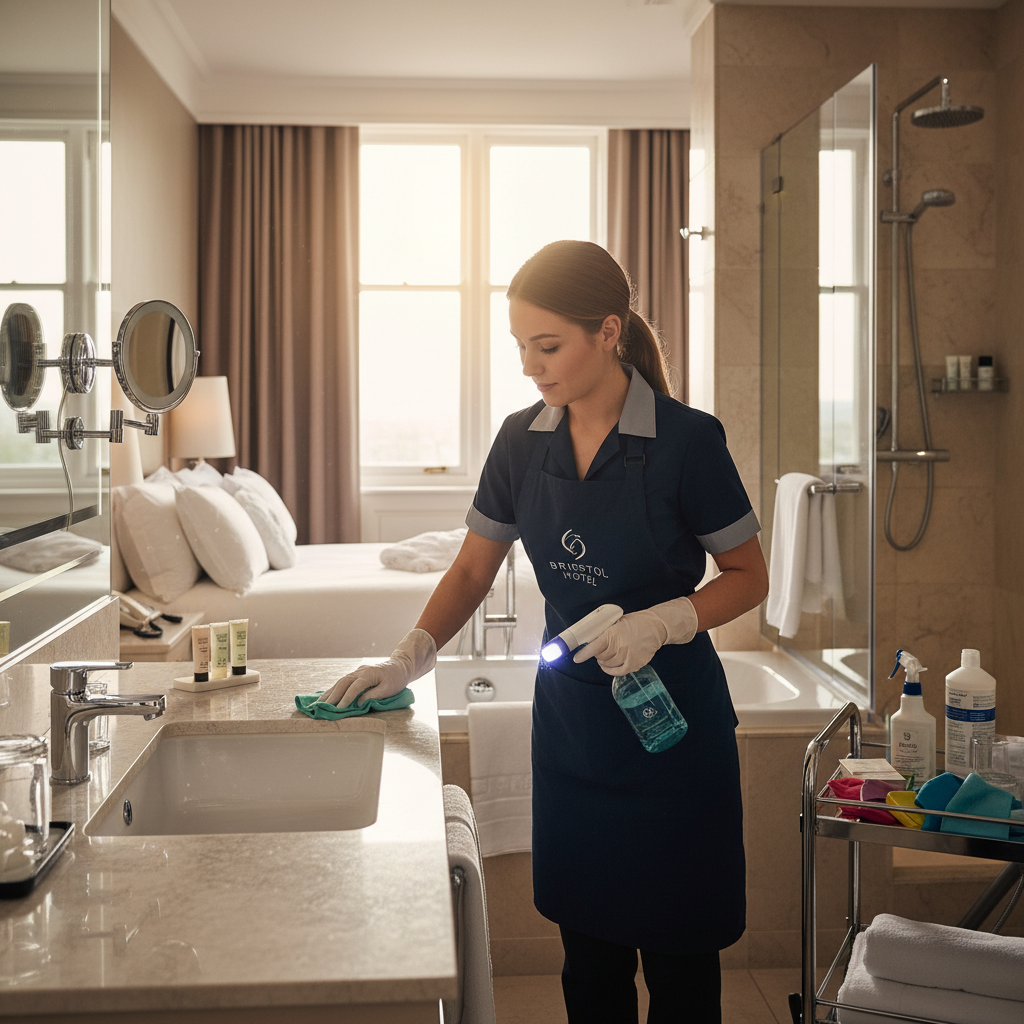
Why Cleanliness Can Make or Break a Bristol Guest’s Stay
A guest can forgive a slow Wi-Fi connection or a slightly noisy street outside. They are far less forgiving about a grubby bathroom or a musty smell in the corridor. In the hospitality sector, cleanliness isn’t a nice-to-have — it’s the baseline expectation, and failing to meet it gets written up on TripAdvisor within hours of checkout.
Bristol’s hospitality scene has grown considerably over the past decade. Independent guest houses, boutique hotels, and larger chains are all competing for the same visitors. With that competition comes pressure, and cleaning is often where corners get quietly cut. Not out of laziness, but because many operators don’t realise their current approach has gaps until the reviews start rolling in.
This post breaks down the most common mistakes we see in hospitality cleaning Bristol businesses make — and how to fix them before they cost you guests.
Treating High-Touch Surfaces as an Afterthought
Most housekeeping routines focus heavily on visible surfaces: vacuuming, wiping down the desk, making the bed look pristine. What gets missed are the surfaces guests touch constantly but rarely look at directly.
Remote controls. Door handles. Light switches. The kettle handle. The toilet flush button. These are the surfaces most likely to carry bacteria and viruses between guests, and they’re the ones least likely to appear on a basic cleaning checklist.
Proper hotel cleaning standards require dedicated attention to these contact points with an appropriate disinfectant product — not just a quick wipe with whatever cloth is already in hand. If your team is working through rooms at speed, high-touch surface disinfection is often the first thing to slip. Building it explicitly into the checklist, rather than assuming it’ll happen, makes a measurable difference.
The Linen Problem Nobody Wants to Talk About
Guests notice linen. They notice when it smells faintly of someone else’s toiletries, when there are faint stains that washing didn’t fully remove, or when towels feel thin and rough after too many industrial cycles.
The mistake many guest houses make is using the same linen rotation for too long without replacing items, and not having a clear process for identifying and pulling damaged or stained items before they reach a room. A visual check before folding and storing makes a difference, but it only works if the person doing it knows what to look for and has the authority to remove substandard items.
This is also an area where outsourcing laundry to a commercial provider — rather than managing it in-house — often improves consistency. Commercial laundry services operate at temperatures and with products that domestic or small-scale machines simply can’t replicate.
Communal Areas Take a Back Seat
Walk through the bedroom, inspect the bathroom, check the minibar. That’s often where quality control stops. But guests spend time in corridors, stairwells, reception areas, and breakfast rooms too, and the cleanliness of those spaces shapes their overall impression of the property.
A beautifully cleaned bedroom counts for less if the stairwell smells stale or the reception desk has fingerprints across the front panel. Guest house cleanliness is a whole-property standard, not just a room-by-room one.
Communal areas often get a quick daily pass rather than a thorough clean because they’re not being turned over the way rooms are. But foot traffic means they need more attention, not less. High-traffic flooring, shared surfaces, and soft furnishings all deteriorate faster in communal spaces and need a more robust cleaning schedule.
Failing to Monitor the Detail Work
Quality control is often where hospitality cleaning standards fall apart. A housekeeper might clean to a high standard, but if there’s no checkpoint before a guest enters the room, small things slip through. A smudged mirror. A hair on the bathroom floor. Dust on the air conditioning unit.
These tiny oversights accumulate in a guest’s mind, especially if they’re paying premium rates. Implementing a secondary walkthrough — ideally by someone other than the person who cleaned — catches these issues before checkout. It’s a small procedural change that can prevent the one-star reviews that hurt your reputation.
Partnering With Professional Hospitality Cleaners
Many Bristol hospitality businesses — particularly smaller guest houses — have attempted to manage cleaning in-house to save costs. The reality is that this often ends up costing more because of high staff turnover, inconsistency, and the time spent training and managing the team.
Professional hospitality cleaning services bring consistency, accountability, and access to equipment and products that deliver the standards guests expect. A dedicated team knows what works in your property and can adapt their approach based on occupancy and seasonal variation.
Beyond the practical side, outsourcing also removes the burden from your management team so you can focus on guest experience, revenue management, and business growth.
What Clean Standards Really Look Like
Getting hospitality cleaning right means treating it as a core part of your business operation, not a back-office function. It starts with clear standards, regular training, and equipment that actually works. It includes high-touch surface disinfection, linen integrity checks, and communal area maintenance as non-negotiable elements.
The good news is that most of the mistakes we outlined are fixable. Whether you’re managing cleaning in-house or considering outsourcing, revisiting your approach now can make the difference between guest complaints and five-star reviews.
If you’d like to explore how professional cleaning can improve your property’s standards and guest satisfaction, get in touch for a free consultation. We work with hospitality businesses across Bristol to maintain the standards that keep guests coming back.
For more insights on professional cleaning benefits, see our guide on how professional cleaning services improve health and reduce sick days — many of the principles apply directly to hospitality settings.