
Why Communal Cleaning Is One of the Most Overlooked Parts of Property Management
Ask most landlords what their biggest headaches are and you’ll hear about rent arrears, maintenance callouts, and difficult tenants. Communal area cleaning rarely makes the top of that list — until something goes wrong. A stairwell that smells, bins that overflow, or a shared entrance caked in mud send a message to every resident: nobody’s in charge here.
For those managing blocks of flats in Bristol, keeping shared spaces clean isn’t just about appearances. It affects tenant satisfaction, property value, and in some cases, your legal responsibilities. This guide breaks down what you need to know.
What Counts as a Communal Area?
It’s worth being specific here because the scope is wider than most people assume. Communal areas in a typical Bristol block of flats include:
- Entrance lobbies and reception areas
- Stairwells, landings, and corridors
- Lifts and lift lobbies
- Bin stores and recycling areas
- Car parks and external pathways
- Laundry rooms or shared utility spaces
- Gardens or shared outdoor areas
Each of these spaces gets used by multiple residents daily, and each has different cleaning requirements. A lift needs wiping down far more frequently than a car park, for example. Getting the schedule right for each area is one of the first things a good communal area cleaning service in Bristol will help you figure out.
Who Is Responsible?
This is where things can get murky. In a leasehold block, the freeholder or managing agent typically holds responsibility for maintaining and cleaning communal spaces — often funded through service charges paid by leaseholders. In a straightforward rental block where one landlord owns all units, that landlord carries the responsibility directly.
Tenancy agreements should spell this out clearly. If they don’t, disputes over who cleans the shared hallway become an avoidable source of friction. Worth reviewing your agreements if there’s any ambiguity.
Bristol City Council also has housing standards that apply to HMOs and larger residential properties. Shared areas in licensed HMOs must be kept clean and in reasonable repair — vague wording, but inspectors interpret it consistently. Don’t leave communal cleaning to chance if you’re operating any licensed properties.
How Often Should Communal Areas Be Cleaned?
There’s no universal answer because it depends on footfall, the number of residents, and the type of block. A six-flat Victorian conversion in Clifton has very different needs to a 40-unit modern development in Bedminster.
As a rough guide:
- High-traffic areas (lobbies, lift interiors, main stairwells): at least weekly, ideally twice a week
- Mid-traffic areas (upper floor corridors, secondary stairwells): weekly
- Low-traffic areas (car parks, external paths): fortnightly or monthly, with reactive cleans as needed
- Bin stores: weekly at minimum, as odour problems escalate quickly
If you’re unsure what schedule makes sense for your specific block, this post on how often communal areas should be cleaned gives a more detailed breakdown by property type.
The Real Cost of Getting It Wrong
Neglected communal spaces damage more than just aesthetics. They’re a constant source of complaint and can directly affect tenant retention. When residents feel their property is poorly maintained, they leave. Turnover costs money — voids, marketing, legal fees, renovation between tenants.
Dirty communal areas also invite pest problems. A stairwell thick with dust and debris is an invitation to insects and rodents. Once established, these problems are far more expensive to tackle than regular preventative cleaning.
There’s also the liability angle. If someone slips on a dirty stairwell or suffers ill health from poor communal hygiene, the responsibility lands with you as the property owner or managing agent. Keep records of your cleaning schedule and stick to it.
What Should a Professional Cleaning Company Handle?
If you’re considering outsourcing communal cleaning — and for multi-unit blocks, it almost always makes sense — a competent contractor should cover:
- Daily or weekly deep vacuuming of carpeted areas
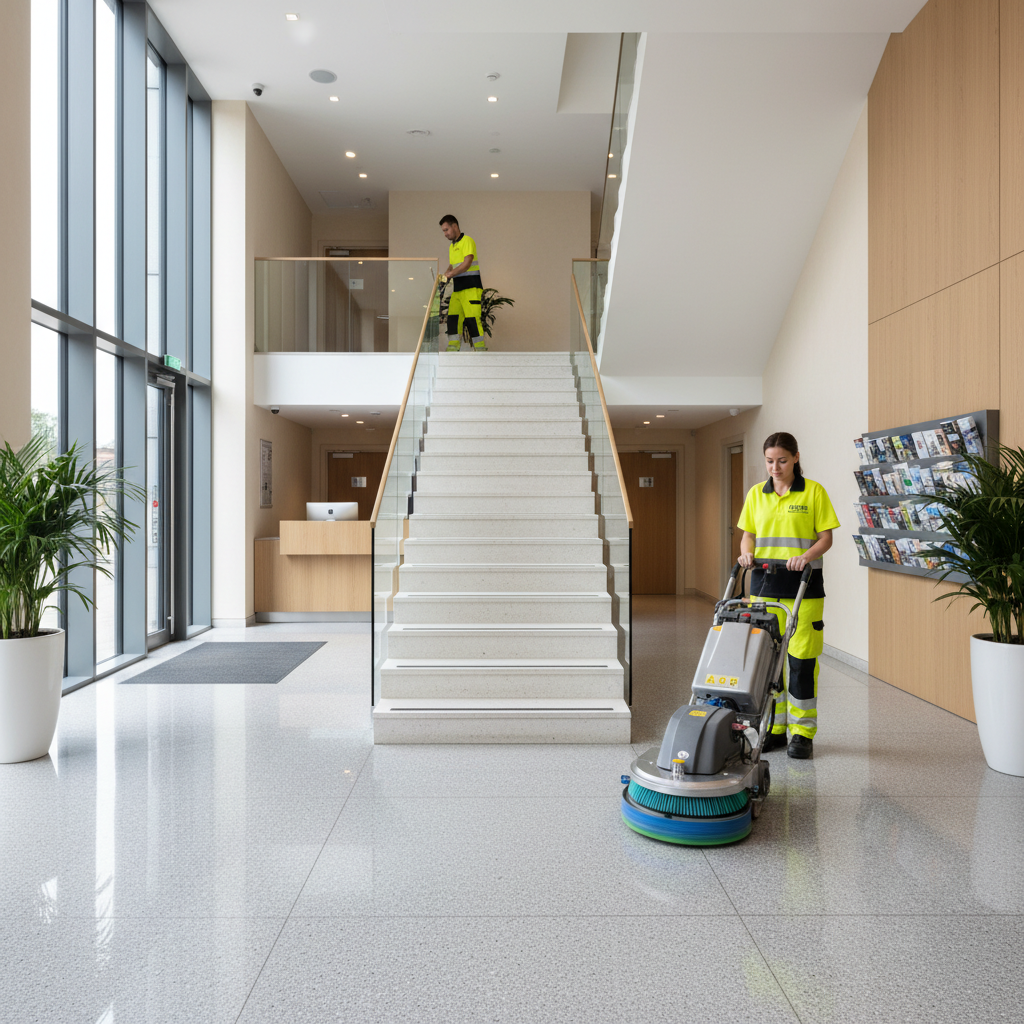
- Hard floor cleaning and polishing (lobbies, stairs, landings)
- Lift interior cleaning, including buttons and handrails
- Stairwell and handrail sanitisation
- Bin area cleaning and odour management
- Window and glass cleaning in communal areas
- Outside entrance and pathway maintenance
- Graffiti removal and rapid response to spills
Some contractors offer flexible contracts with reactive cleaning slots built in — useful for dealing with the inevitable mess from building work or resident incidents. That flexibility is valuable, especially in larger blocks.
Getting Competitive Quotes
When approaching cleaning contractors, be specific about what needs cleaning, how often, and your expectations for response times. A good contractor will visit your property, ask detailed questions, and provide a tailored proposal rather than a generic quote.
Ask for references from other property managers in the Bristol area — preferably blocks of similar size and type to yours. Check their track record with inspections and whether they’ve managed to keep service charges reasonable.
One final tip: make sure your contractor has appropriate insurance and is DBS-checked if they’ll have regular unsupervised access to the building. It’s a small precaution that protects you and your residents.
Keeping Residents Engaged
Even with professional cleaning, you need residents to respect shared spaces. A simple notice in the lobby reminding people to bin their rubbish properly or not to block corridors with personal items makes a difference. Some managing agents even create resident group chats to flag issues quickly.
Regular, visible cleaning sends a signal that someone’s in control. Residents are far more likely to maintain standards in a well-kept space than one that’s already looking neglected. Start clean, stay clean.