
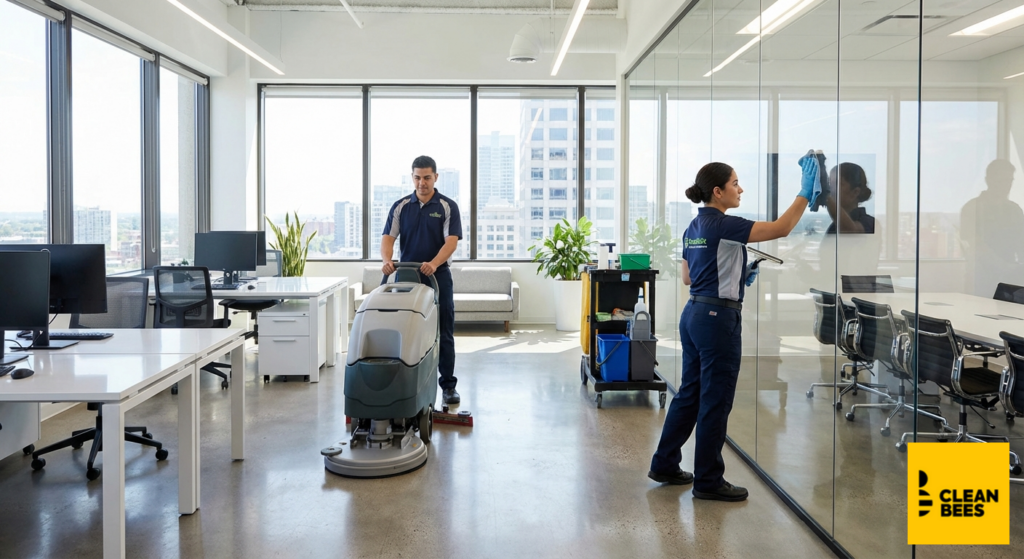
Most facilities managers have asked themselves this question at some point. The frequency of office cleaning isn’t just about keeping up appearances — it affects employee health, productivity, first impressions for visitors, and even the lifespan of your fixtures and fittings. Yet there’s no one-size-fits-all answer. The right cleaning schedule depends on your office size, headcount, industry, and how you use the space.
Daily Cleaning: The Non-Negotiables
Certain tasks need doing every single working day without exception. These aren’t luxury items — they’re basic hygiene and safety requirements. Washrooms demand daily attention. Toilets, sinks, mirrors, and floors need disinfecting and restocking. In high-traffic offices, you might need twice-daily servicing. Nobody should walk into a washroom at 4pm and find it in the same state as when the morning rush finished. Kitchen and break areas also need daily cleaning. Work surfaces, sinks, appliances, and floors collect food debris and bacteria quickly. A grimy kitchen becomes a health hazard and damages staff morale faster than almost anything else. Bin emptying is another daily essential. Overflowing bins look unprofessional, smell unpleasant, and attract pests. Regular office cleaning services ensure these tasks happen reliably without you having to think about them. High-touch surfaces — door handles, lift buttons, handrails, light switches — should be sanitised daily, especially during cold and flu season. These are the primary transmission points for illness in any workplace.
Weekly Tasks: The Deep Clean Foundation
Beyond daily essentials, most offices benefit from a more thorough weekly clean. This is where you tackle the tasks that don’t need daily attention but shouldn’t be left for weeks either. Hard floors need proper mopping with appropriate cleaning agents. Daily spot-cleaning handles spills, but weekly floor care prevents the gradual buildup of grime that makes a space look tired. Carpets and upholstery should be vacuumed thoroughly at least once a week. In offices with heavy foot traffic or allergy sufferers, twice weekly is better. Professional carpet cleaning on a quarterly or six-monthly basis extends the life of your flooring significantly. Dusting of desks, shelves, skirting boards, and other surfaces prevents allergen accumulation. It also protects electronic equipment from dust infiltration that can cause overheating and failure. Glass and mirrors need proper cleaning weekly to maintain a polished appearance. Smudged glass on internal doors or partition walls makes an otherwise clean office look neglected. For businesses in Bristol and surrounding areas, local office cleaning specialists understand the specific challenges of city-centre locations, including higher pollution levels and traffic-related dust.
Monthly and Periodic Tasks: The Detail Work
Some cleaning tasks only need attention monthly or even less frequently, but they’re no less important for maintaining a professional environment. Light fixtures and ceiling tiles accumulate dust and dead insects over time. Monthly attention keeps them looking fresh and maintains optimal lighting levels. Dim, dusty lighting creates a gloomy atmosphere that affects mood and productivity. Air vents and ventilation systems need regular cleaning to maintain air quality and prevent the circulation of dust and allergens. This is particularly important in older buildings or those with HVAC systems that recirculate air. Hard floor maintenance like buffing, polishing, or resealing happens on a schedule determined by foot traffic and floor type. High-traffic areas might need monthly attention; quieter corners might manage with quarterly care. Window cleaning (external) depends on your building type and local environment. Ground-floor offices in busy areas might need fortnightly window cleaning; upper floors in quieter spots might manage monthly or even quarterly.
Factors That Change Your Cleaning Frequency
The standard daily/weekly/monthly framework needs adjustment based on several variables specific to your workplace. Headcount and density matter enormously. An office with 50 people in 1,000 square feet needs more frequent cleaning than the same number in 3,000 square feet. More people means more mess, more waste, and faster accumulation of dirt and bacteria. Industry and work type affects requirements too. A creative agency with staff at desks most of the day has different needs from a logistics company with constant foot traffic between office and warehouse. Healthcare-adjacent businesses, food preparation areas, or any environment with regulatory standards need more rigorous schedules. Seasonal variations play a role. Winter brings wet weather, road salt, and mud into reception areas. Spring and summer increase pollen and allergen levels. Your cleaning schedule should flex to handle these predictable patterns. Visitor frequency changes the equation. Client-facing areas like reception, meeting rooms, and presentation spaces need maintaining to a higher standard than back-office areas that only staff see.
Creating Your Office Cleaning Schedule
The most effective approach is tiered cleaning — different frequencies for different areas and tasks based on importance and usage. Critical areas (washrooms, kitchens, reception, meeting rooms) need the most frequent attention. These are the spaces that create impressions and affect health most directly. General office areas (open-plan workspaces, corridors) need regular but less intensive cleaning. Daily attention to high-touch surfaces and bins, with thorough weekly deep cleaning. Low-traffic areas (storage rooms, server rooms, seldom-used meeting spaces) can manage with less frequent cleaning — perhaps weekly or even fortnightly depending on use. External areas (entrances, smoking areas, car parks) need daily litter picking and periodic deep cleaning, with frequency adjusted for weather and season. Professional commercial cleaning providers can assess your specific needs and recommend a tailored schedule. They bring experience from multiple sites and can spot requirements you might overlook.
Signs Your Current Schedule Isn’t Working
How do you know if your current cleaning frequency is inadequate? Look for these warning signs:
- Consistent complaints from staff about facilities — if people are mentioning it, it’s already a problem
- Rapid deterioration of flooring, fixtures, or furnishings — dirt acts as an abrasive and shortens lifespan
- Increased sick days — poor hygiene contributes to illness transmission
- Negative visitor comments — first impressions matter for client retention and staff recruitment
- Pest sightings — infestations often indicate inadequate waste management or cleaning
- Dust accumulation visible on surfaces within a day or two of cleaning
If you’re seeing these symptoms, your schedule needs increasing or your current cleaning provision needs reviewing.
The Cost-Benefit Calculation
There’s a natural temptation to reduce cleaning frequency to save money. This is usually false economy. Consider: Staff productivity — clean, pleasant environments improve focus and reduce sick days. Studies consistently show correlation between workplace cleanliness and employee output. Asset lifespan — regular cleaning extends the life of carpets, flooring, furniture, and equipment. Replacement costs dwarf cleaning expenditure. Professional image — client-facing businesses lose revenue when poor facilities create negative impressions. Compliance and liability — inadequate cleaning can lead to health and safety violations, accidents, or illness outbreaks with serious legal and financial consequences. Most offices benefit from professional daily cleaning with periodic deep cleans and specialist services. The exact schedule depends on your circumstances, but cutting corners rarely pays off.
Conclusion
So how often should an office be cleaned? Daily for essentials, weekly for thorough maintenance, and monthly or periodically for detail work. But the real answer is: frequently enough to maintain health, productivity, and professional standards for your specific workplace. Start with the framework outlined here, then adjust based on your headcount, industry, building type, and the warning signs you observe. And remember — professional cleaning isn’t an expense to minimise, it’s an investment in your people, your assets, and your business reputation.
Need help determining the right cleaning schedule for your office? Contact Clean Bees for a free assessment tailored to your workplace.